The Complete Guide to Building Resilient Soil in Georgia: From Red Clay to Black Gold
The Complete Guide to Building Resilient Soil in Georgia: From Red Clay to Black Gold
Summary
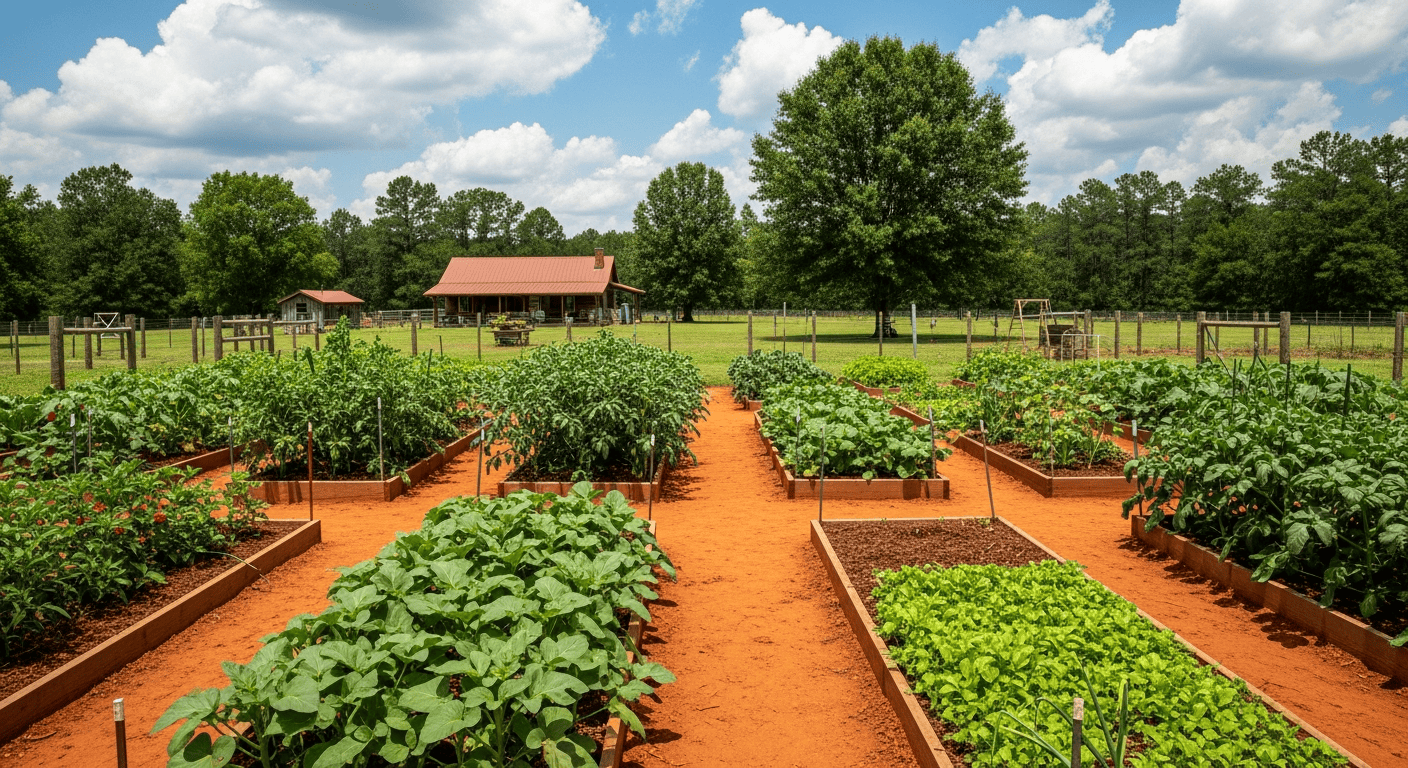
Howdy, neighbor. If you’ve ever tried to stick a shovel in the ground in July here in Forsyth County, Georgia, you know our soil can be a challenge. It’s either baked brick-hard red clay or, further south, sand that won’t hold water to save its life. With our weather getting more unpredictable—late frosts after warm winters, sudden droughts, then biblical deluges—your single greatest asset isn’t a new tractor or a fancy greenhouse. It’s building healthy, living, resilient soil. This guide is your roadmap to turning that stubborn Georgia dirt into the fertile foundation that can handle whatever our wild climate throws at it.
Key Takeaways
- Test, Don’t Guess: The single most important first step is getting a soil test from your local UGA Extension office. It’s the only way to know your soil’s pH and nutrient levels, taking all the expensive guesswork out of the equation.
- Organic Matter is King: For Georgia’s heavy clay, organic matter (like compost) is the miracle worker. It breaks up compaction, improves drainage, and helps the soil hold water during a drought. For sandy soils, it’s what provides the structure to hold onto water and nutrients.
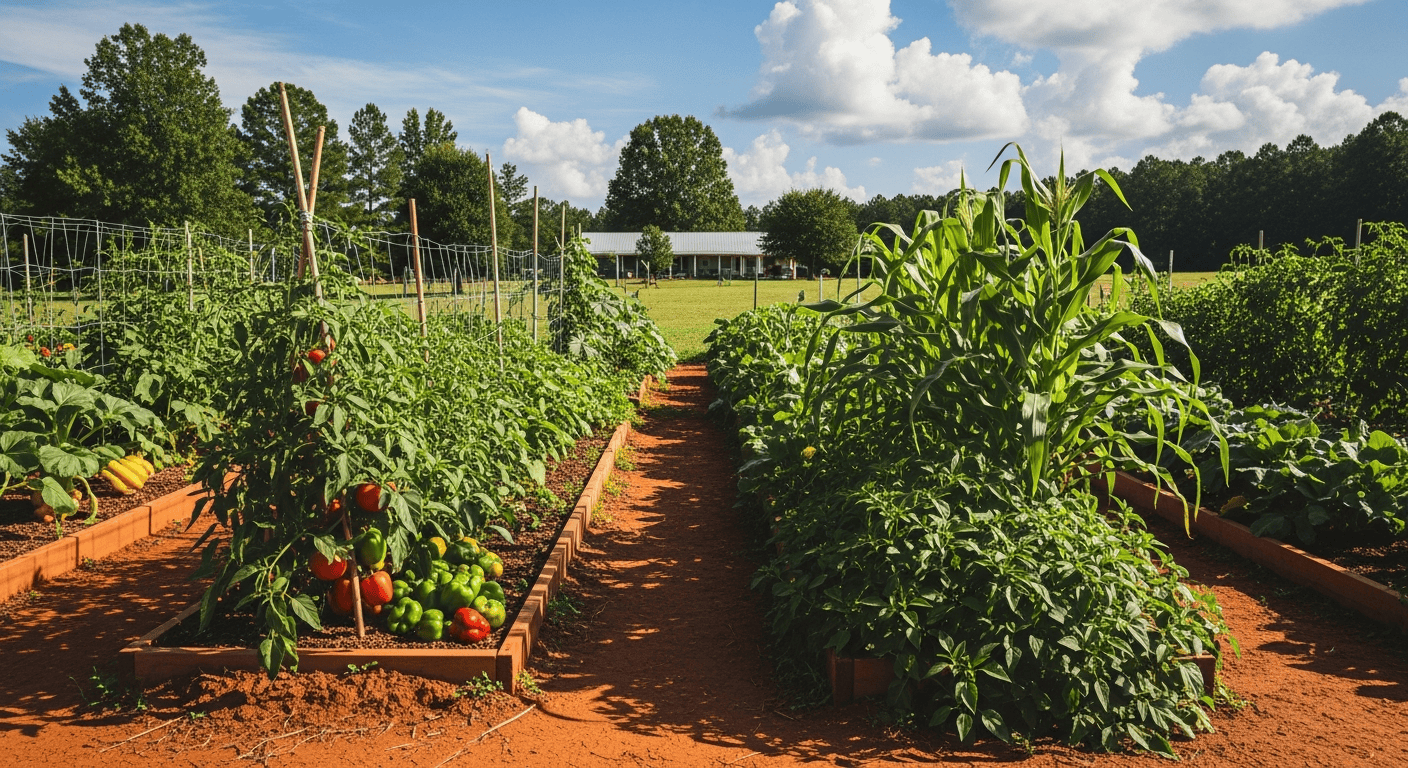
- Always Cover Your Soil: Bare soil is a liability in Georgia. Use cover crops in the off-seasons and heavy mulch during the growing season to protect your soil from erosion, retain moisture, suppress weeds, and build fertility year after year.
The Deep Dive
Understanding Your Starting Point: The Georgia Soil Challenge
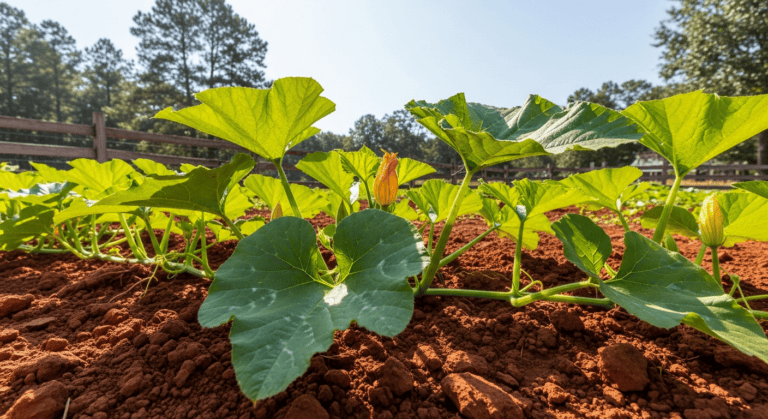
Let’s be honest, farming in Georgia is a special kind of rodeo. Our soil is the main arena, and it has a personality all its own. Most of us, especially here in the Piedmont region from Athens to Atlanta and beyond, are dealing with Ultisols, more commonly known as red clay.
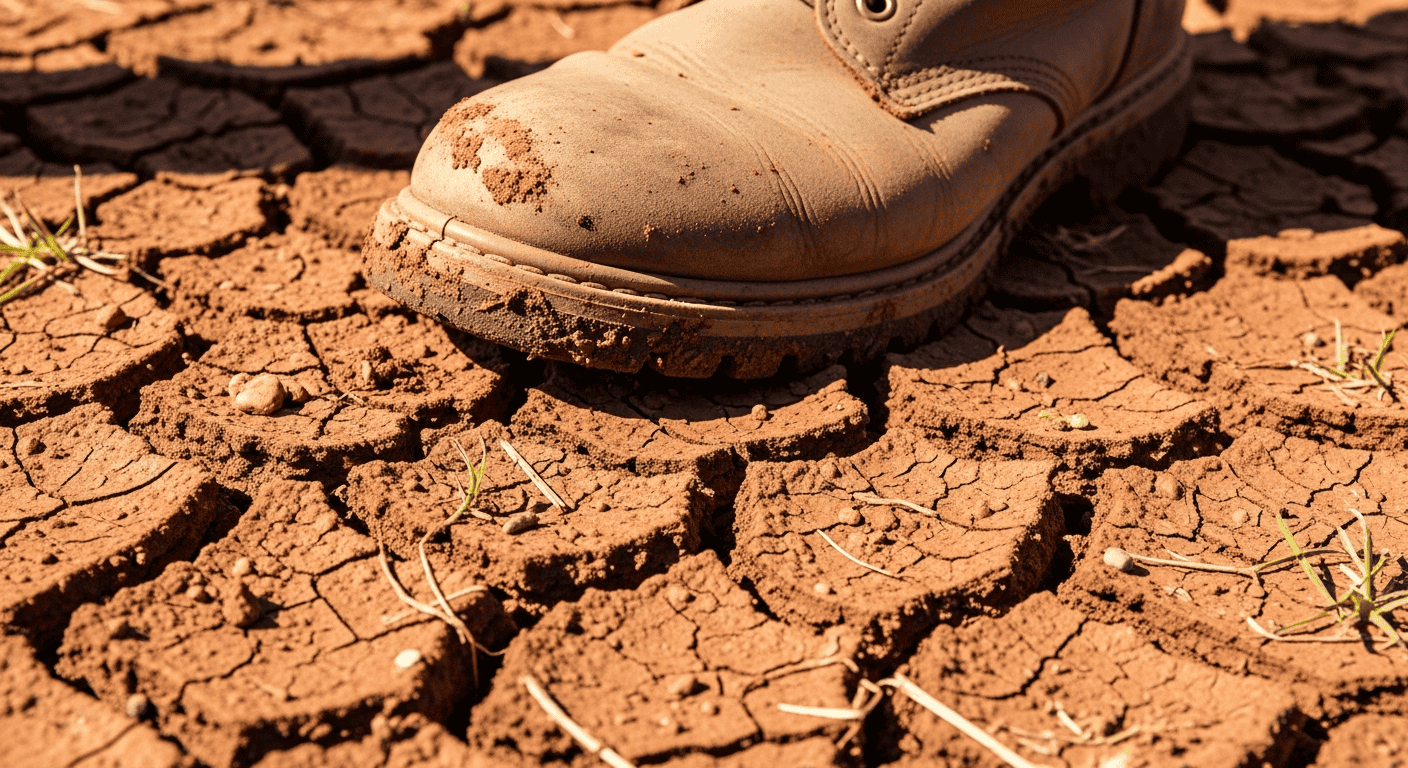
This clay is a double-edged sword. On one hand, it’s rich in minerals and has a fantastic ability to hold onto nutrients (a high Cation Exchange Capacity, for the science-minded). But on the other hand, it has major challenges:
- Compaction: The fine particles of clay easily squish together, especially when wet. This squeezes out air pockets, making it difficult for plant roots to penetrate and for water to drain. You end up with waterlogged plants after a storm and a brick-like surface during a dry spell.
- Poor Drainage: When it rains hard—and it does in Georgia—water can pool on top of clay soil, suffocating plant roots. This creates an anaerobic environment where beneficial soil life can’t thrive.
- Crusting and Cracking: After that rain, the sun comes out and bakes the surface into a hard crust. As it dries further, it can crack open, damaging shallow plant roots.
Folks in the Coastal Plain of South Georgia have the opposite problem: sandy soil. It drains so fast that water and nutrients leach right through, leaving plants thirsty and hungry. The good news? The solution to both problems is remarkably similar: building up your soil’s organic matter.
Step 1: Get a Soil Test (This is Non-Negotiable)
I said it before, and I’ll say it again because it’s the gospel truth of Georgia farming: Test, don’t guess. Before you add a single bag of anything to your soil, you need to know what you’re working with. A soil test is like a blood test for your land.
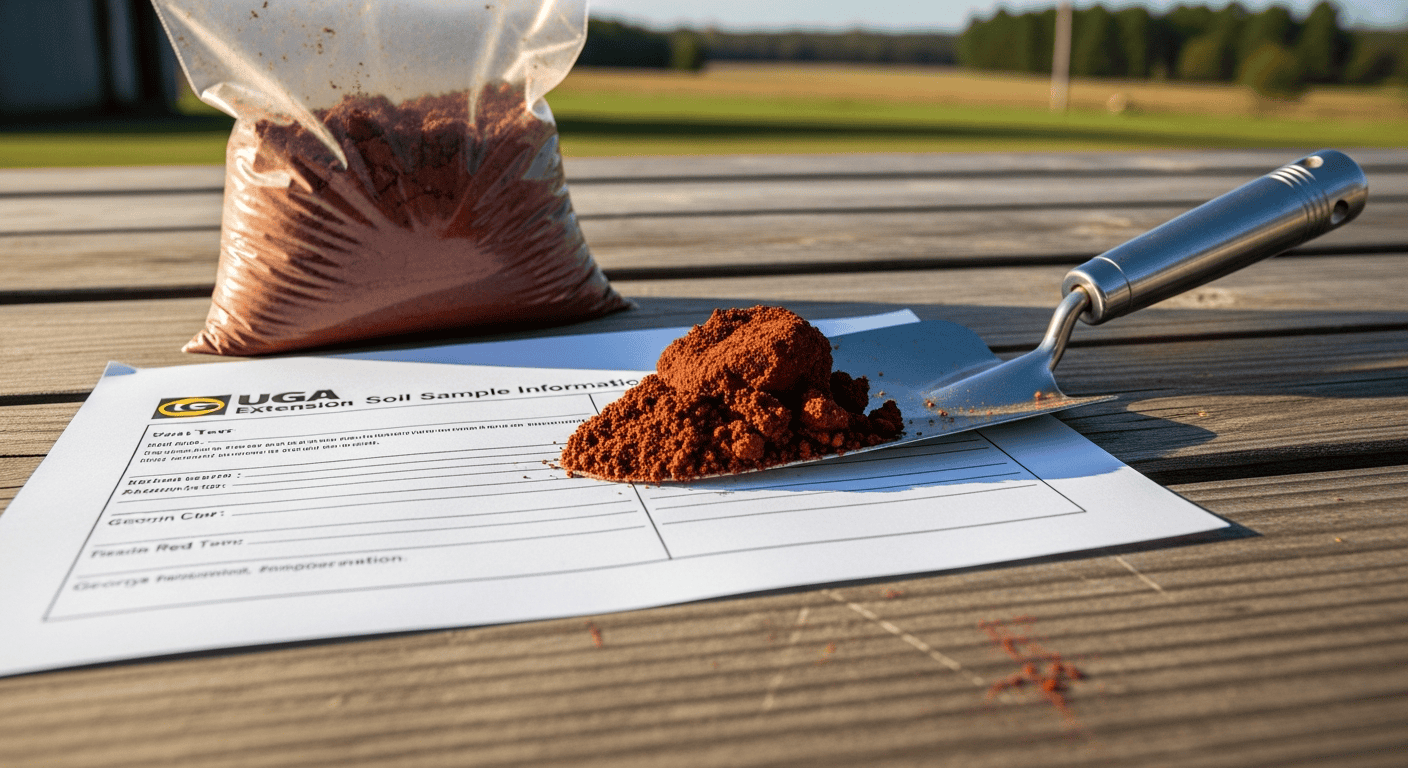
The University of Georgia (UGA) Extension Service makes this incredibly easy and affordable. For a few bucks, you’ll get a detailed report that tells you everything you need to know.
How to Take a Proper Soil Sample:
- Get the Right Tools: You’ll need a clean plastic bucket, a soil probe or a trowel/shovel, and your sample bag from the Extension office. Avoid using a galvanized or brass bucket, as the metals can contaminate your sample.
- Take Multiple Subsamples: Your garden or pasture isn’t perfectly uniform. Walk in a zigzag pattern across the area you want to test and take 8-10 small samples from a depth of 4-6 inches (where most plant roots live).
- Mix and Bag: Put all your subsamples into the plastic bucket and mix them together thoroughly. This gives you a representative average of the entire area. From this mixture, fill your sample bag to the fill line, label it clearly, and take it to your county Extension office.
Decoding Your UGA Soil Report:
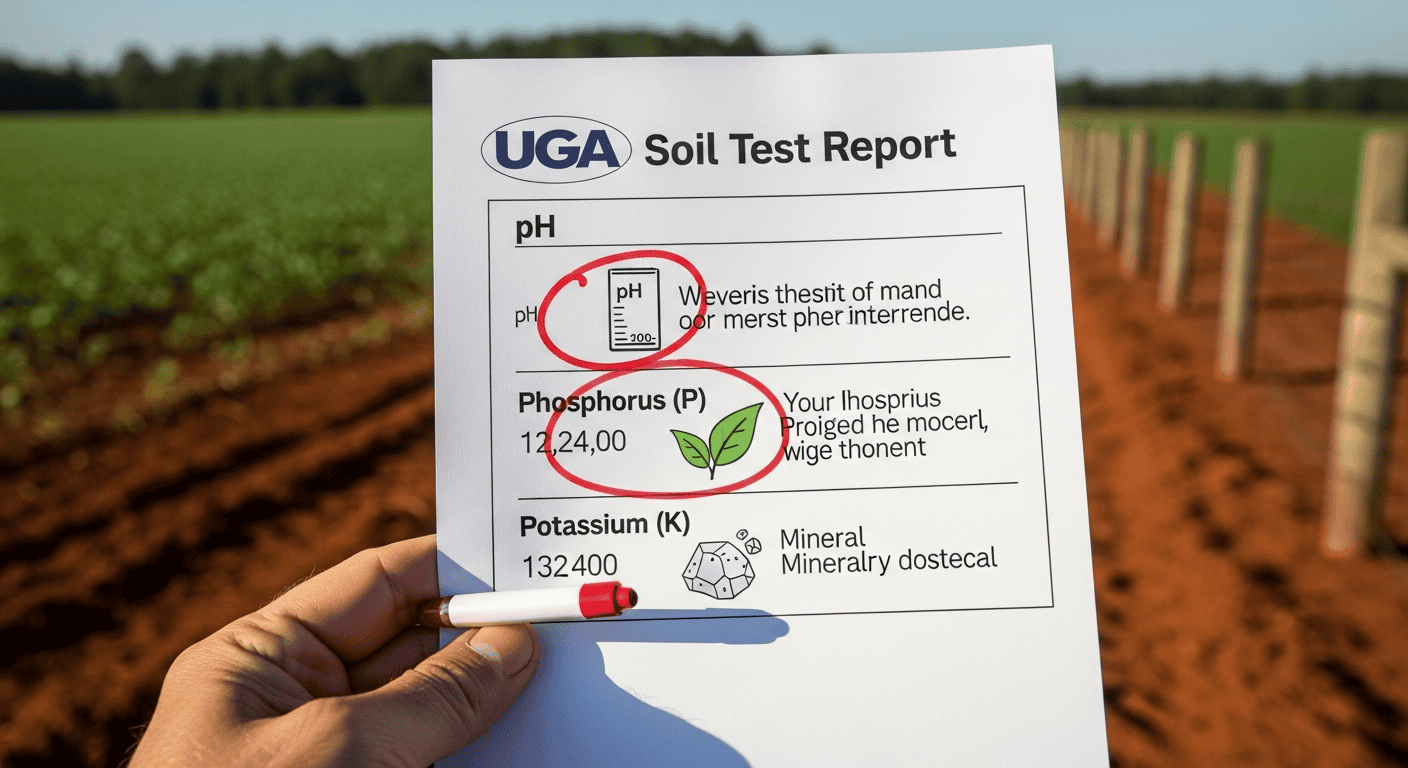
Your report will come back with a few key numbers. The most critical one to look at first is the pH. Most vegetables, fruits, and grasses in Georgia thrive in a slightly acidic soil with a pH between 6.0 and 6.5. Our native soil is often much more acidic (sometimes as low as 4.5-5.5). The report will give you a precise recommendation for how much lime to add to raise the pH to the optimal level. Applying lime without a test can raise the pH too high, which is much harder to fix than low pH.
The report will also give you levels for Phosphorus (P), Potassium (K), Calcium (Ca), Magnesium (Mg), and Zinc (Zn). It will then provide specific recommendations for how many pounds of fertilizer (like 10-10-10) to add per 1,000 square feet. This is pure gold—it saves you money and prevents over-fertilizing, which can harm your plants and the environment.
Step 2: The Holy Grail – Building Organic Matter
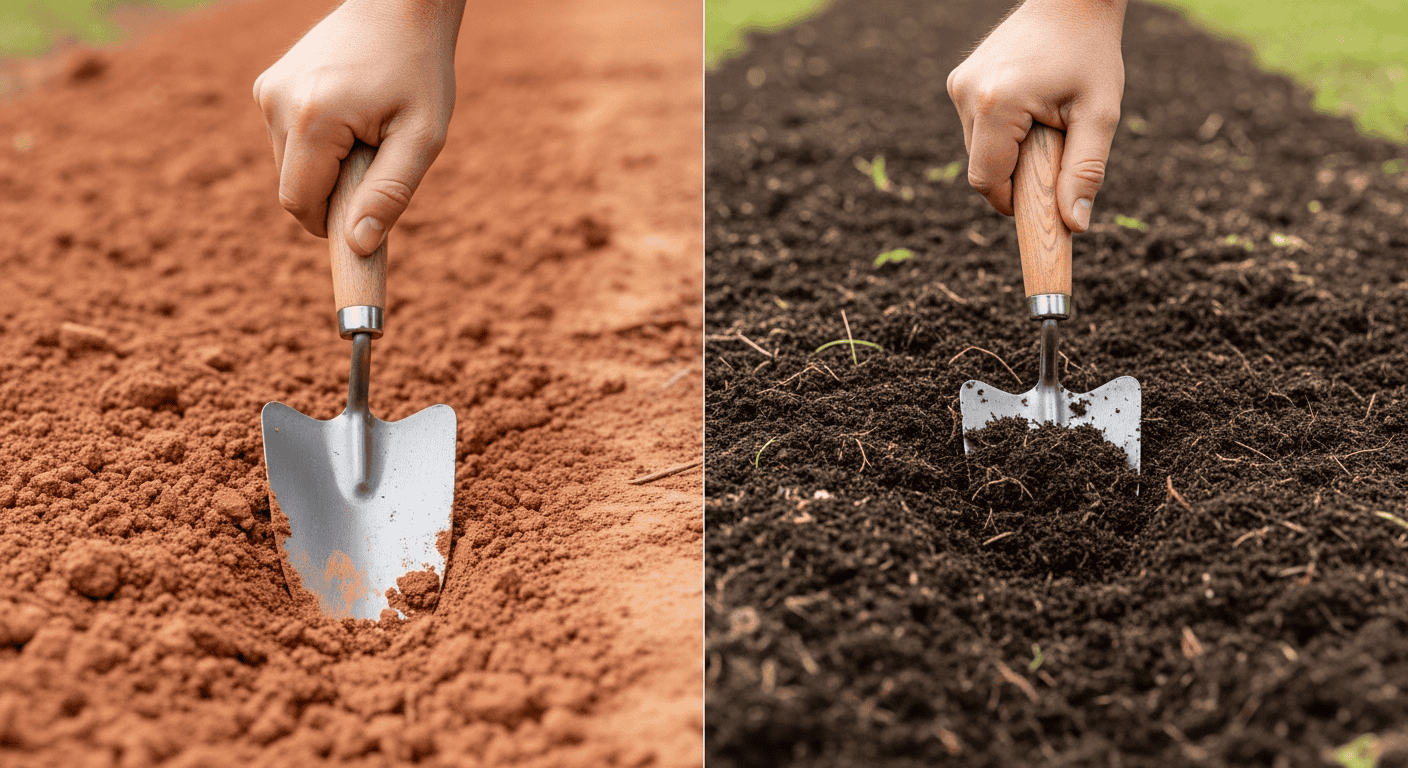
If a soil test is the diagnosis, organic matter is the cure for almost everything that ails Georgia soil. Organic matter is the decomposed remains of plants and animals. In your soil, it becomes humus, a dark, spongy, life-giving material. For our clay, it acts like a wedge, forcing the clay particles apart to create space for air and water. For sandy soil, it acts like a sponge, holding onto that water and those nutrients.
Your goal should be to increase your soil’s organic matter content to at least 5%. Most Georgia soils start at a measly 1-2%.
Your Best Weapon: Compost
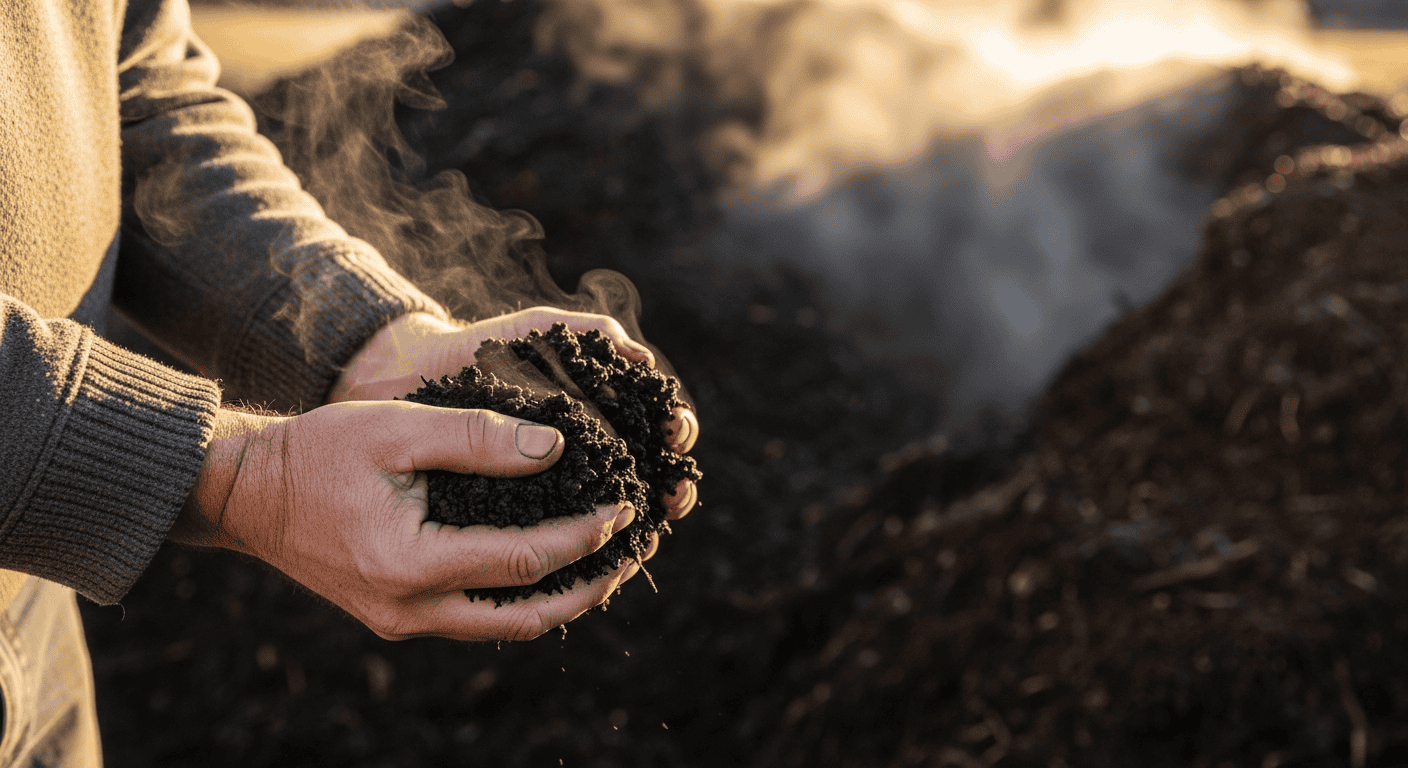
Compost is the number one amendment. It’s black gold. You can make it yourself or buy it bagged or by the truckload.
- How it Works: Compost is teeming with beneficial microorganisms. When you add it to your soil, this army of bacteria and fungi gets to work, improving soil structure, unlocking nutrients, and helping to suppress diseases.
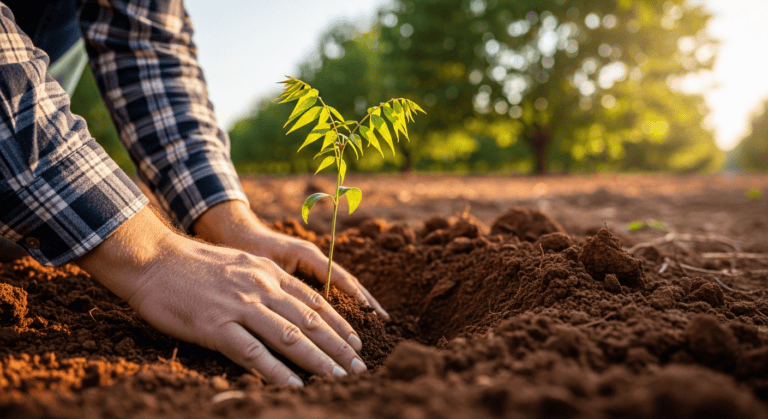
- Application: The first time you amend a new bed, don’t be shy. Add a 2- to 4-inch layer of finished compost and work it into the top 6-8 inches of your soil. For established beds, a 1-inch top dressing each year is usually sufficient.
- Making Your Own: A simple compost pile can be made with alternating layers of “greens” (kitchen scraps, fresh grass clippings, manure) and “browns” (fallen leaves, straw, wood chips). Keep it moist like a wrung-out sponge, turn it occasionally, and let nature do the work.
Other Key Amendments:
- Aged Animal Manure: Manure from chickens, goats, rabbits, or cows is a fantastic source of nutrients and organic matter. Crucially, it must be well-composted or aged for at least 6 months. Fresh manure is too high in nitrogen and can burn your plants and may contain harmful pathogens.
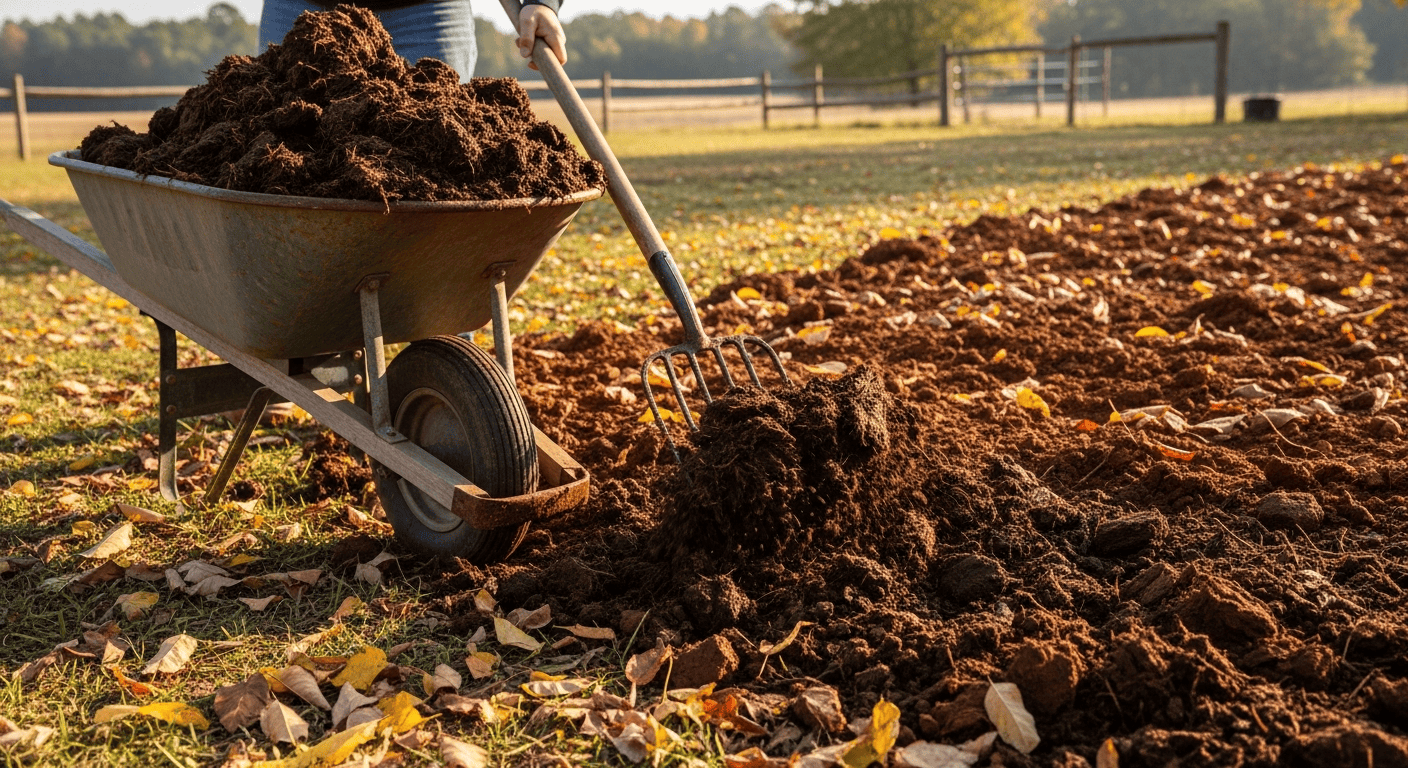
- Leaf Mold: Don’t bag those autumn leaves! Rake them into a pile, shred them with a mower if you can, and let them sit for a year or two. The resulting leaf mold is a phenomenal soil conditioner, especially for improving soil texture.
- Biochar: This is a more modern amendment, essentially a very stable form of charcoal made for soil. It acts like a coral reef, providing a permanent structure with immense surface area for beneficial microbes to live in and for nutrients and water to cling to.
Step 3: The Power of Cover Cropping
If you leave your garden soil bare over our wet Georgia winters, you’re asking for trouble. Heavy rains will wash away your precious topsoil and leach out nutrients. The solution is to plant a cover crop, which is essentially a living mulch that protects and improves the soil.
Cool-Season Cover Crops (Plant September – October):
These are your winter workhorses. They protect the soil from erosion, scavenge for any leftover nutrients, and many will add nitrogen for your spring crops.
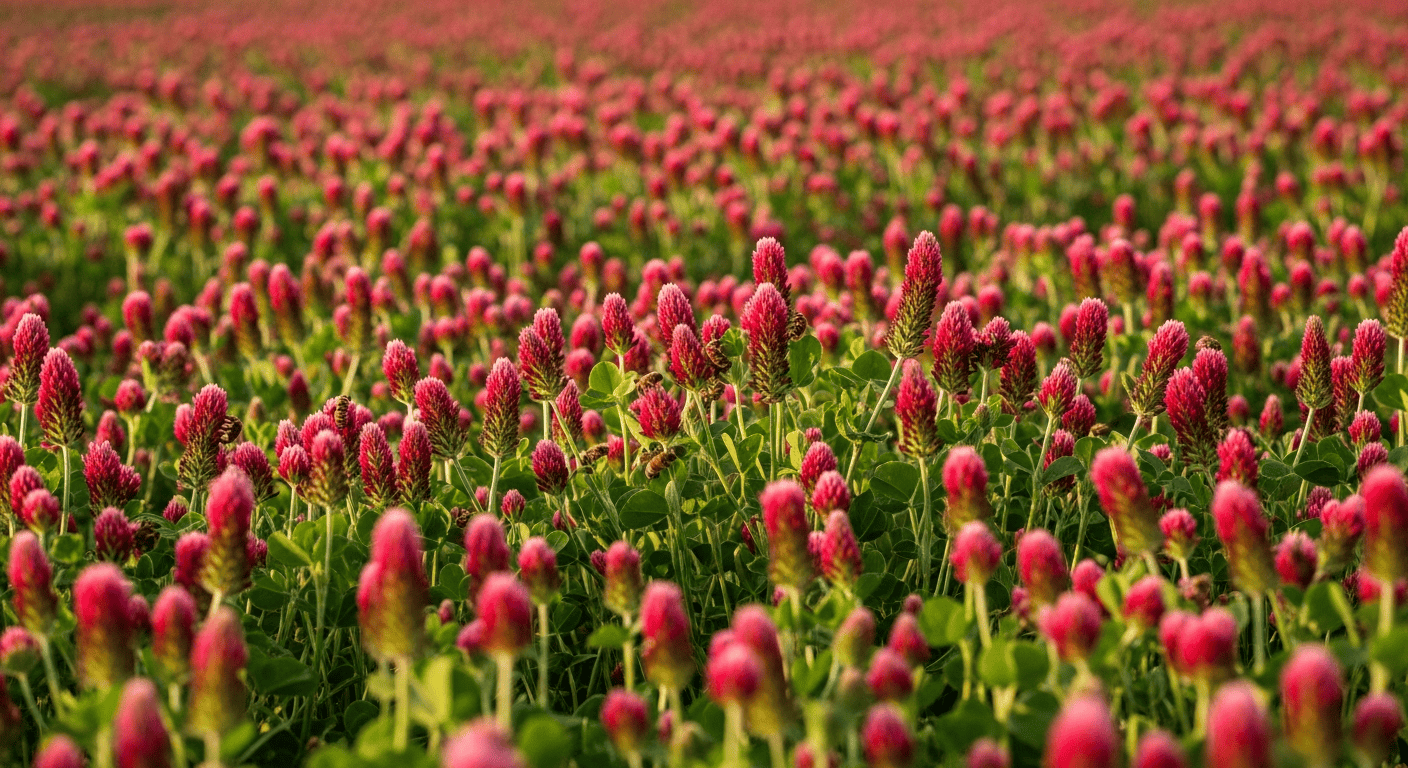
- Crimson Clover: This is a beautiful and effective legume. Legumes have a special relationship with bacteria that allows them to pull nitrogen from the air and “fix” it in the soil for your next crop to use. It’s a free source of nitrogen fertilizer!
- Cereal Rye (not Ryegrass!): This grass grows a massive, deep root system that is incredible at breaking up compacted clay soil. It also produces a huge amount of biomass (organic matter) to turn back into the soil in the spring.
- A Mix is Best: I often plant a cocktail of cereal rye, crimson clover, and Austrian winter peas. The mix provides the benefits of all the plants, creating a diverse and resilient soil ecosystem.
Warm-Season Cover Crops (Plant June – July):
These are perfect for a plot you’re letting rest for the summer or for planting after your spring crops (like potatoes) come out. They smother summer weeds and thrive in our heat.
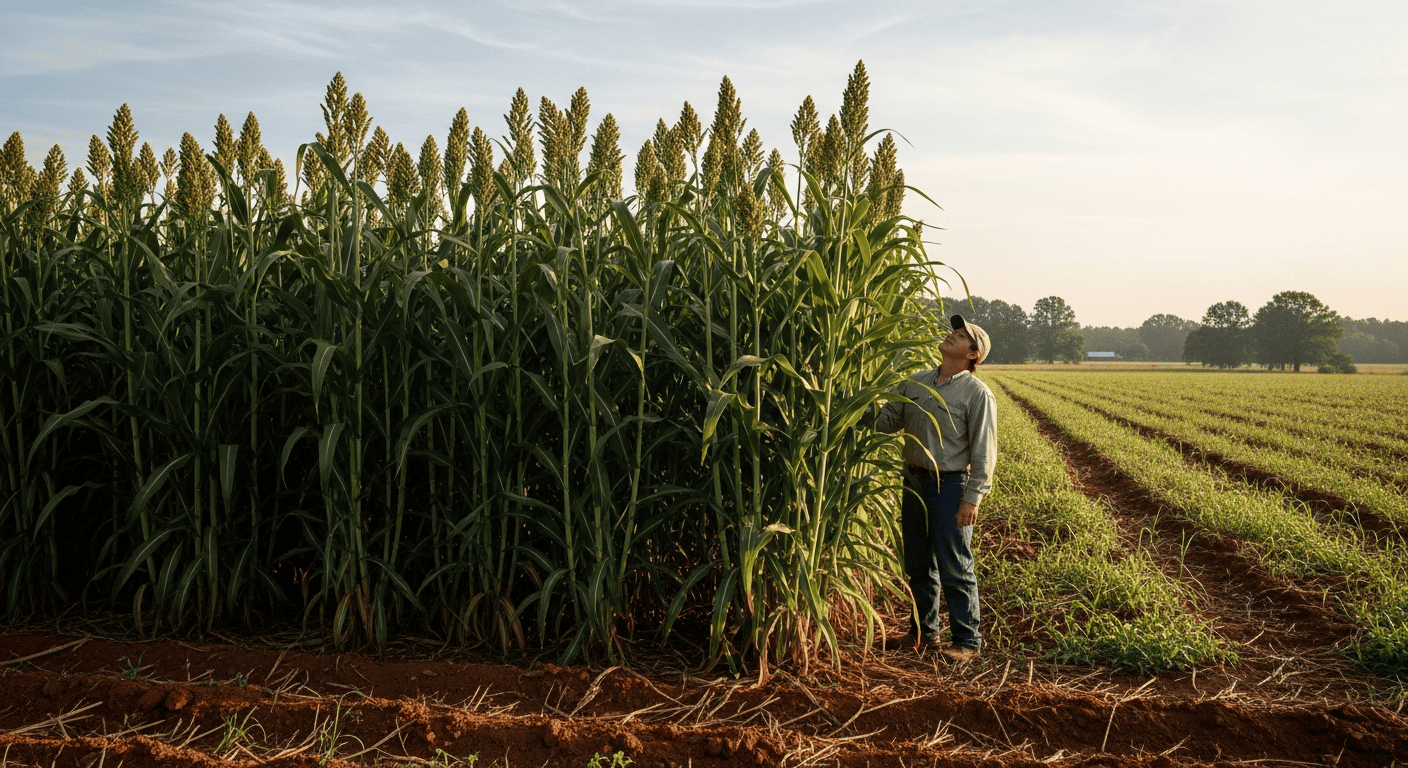
- Sorghum-Sudangrass: This is a beast. It can grow over 6 feet tall, producing an enormous amount of organic matter and shading out tough weeds like nutsedge. Its deep roots also help with compaction.
- Cowpeas (Southern Peas): A fantastic nitrogen-fixer that loves the heat. Plus, you can eat the peas! It’s a cover crop and a food crop in one.
- Buckwheat: This is a “smother crop” that germinates in just a few days and flowers in about a month. It’s great for short windows and attracts a ton of beneficial insects.
Step 4: Mulch, Mulch, and More Mulch
In a Georgia summer, the sun is merciless. Bare soil can reach temperatures well over 120°F, which will cook plant roots and kill off beneficial soil life. A thick layer of mulch is your soil’s sun hat and drink of water.
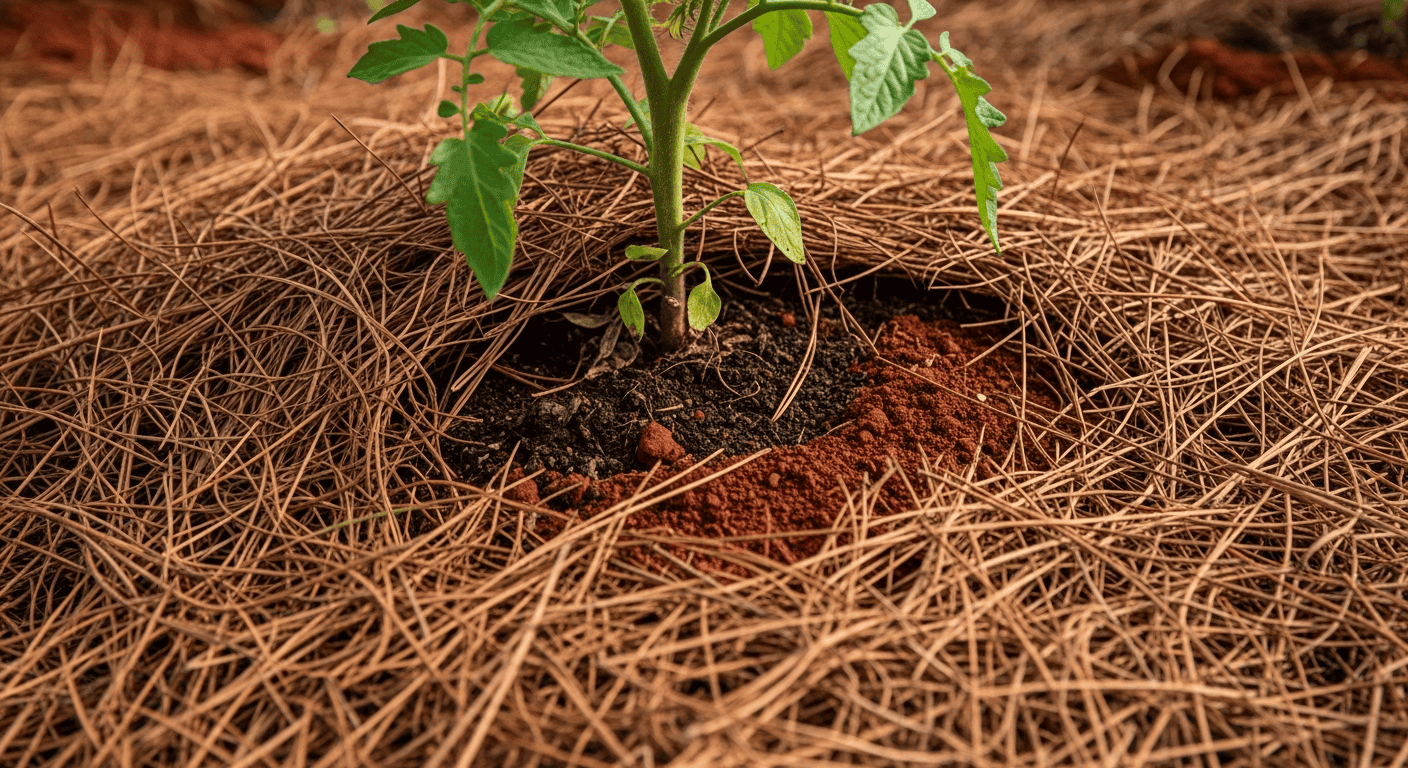
Mulch is simply any material you put on top of the soil. It’s different from compost, which you work into the soil.
-
Benefits are Immense:
- Moisture Retention: A 3-4 inch layer of mulch can reduce water evaporation from the soil surface by up to 70%. This is critical during our summer droughts and with metro Atlanta’s watering restrictions.
- Temperature Regulation: It keeps the soil cooler in the summer and warmer in the winter, reducing stress on plant roots.
- Weed Suppression: It blocks sunlight, preventing many weed seeds from germinating. This means less work for you!
-
Best Mulches for Georgia:
- Pine Straw: Plentiful, affordable, and breaks down slowly. It’s a classic for a reason.
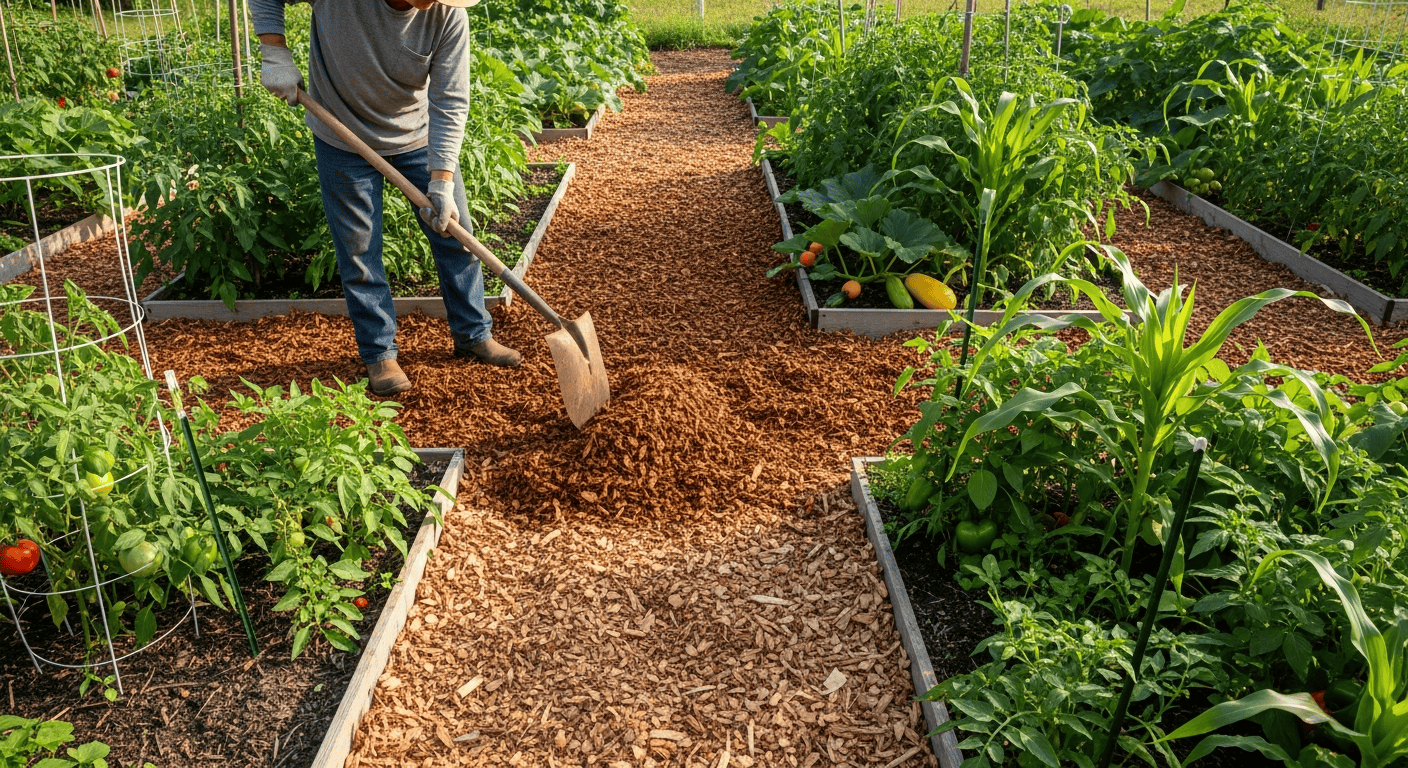
- Wood Chips: Often available for free from local arborists. They are excellent for paths and around perennial plants like fruit trees and blueberry bushes.
- Shredded Leaves: A free resource every fall. They break down over the season, adding valuable organic matter.
- Straw: Great for vegetable gardens, but make sure it’s straw (the stalk of a grain) and not hay (which is full of weed seeds).
Putting It All Together: A Year in the Life of a Resilient Georgia Garden
Let’s imagine a single garden bed over a year:
- September: You’ve just harvested your summer tomatoes. You top-dress the bed with an inch of compost, then broadcast a seed mix of cereal rye and crimson clover. You water it in.
- October – February: The cover crop grows, protecting your soil all winter. Its roots are loosening the clay, and the clover is fixing nitrogen.
- March: About a month before you want to plant your tomatoes, you terminate the cover crop. You can do this by mowing it down and then covering the bed with a tarp for a few weeks (called occultation) or by tilling it in (though try to till as little as possible).
- April: You pull back the decomposing cover crop residue, amend with a little more compost if needed based on your soil test, and plant your tomato seedlings.
- May: Once the soil has warmed up and the plants are established, you apply a 3-4 inch layer of straw or pine straw mulch around the plants, being careful not to pile it against the stems.
- June – August: You water deeply but infrequently, letting the mulch do its job. Your plants are less stressed by the heat and have consistent moisture, helping to prevent problems like blossom-end rot.
- September: The cycle begins again.
By following this cycle, you are not just growing vegetables; you are actively farming your soil. Each year, it will get darker, looser, more fertile, and better able to handle the extremes of our Georgia climate. That is the path from red clay to black gold.
Frequently Asked Questions (FAQ)
1. How do I fix my heavily compacted Georgia clay soil?
The best long-term solution is consistent addition of organic matter. Start with a 2-4 inch layer of compost worked into the top 6 inches. In subsequent years, use cover crops like cereal rye with its deep root system and continue to top-dress with compost. Avoid walking on your beds, especially when wet, and limit tilling as much as possible.
2. Can I just add sand to my clay soil to loosen it?
No, please don’t do this! Adding sand to clay soil, especially in the wrong proportions, doesn’t create loam. It creates a material very similar to concrete. You must add organic matter (the “third leg of the stool”) to properly amend clay.
3. What’s the single best cover crop for a beginner in Georgia?
For the cool season (fall planting), Crimson Clover is a great choice. It’s easy to grow, fixes a good amount of nitrogen, and is easy to terminate in the spring. For the warm season (summer planting), Buckwheat is fantastic because it grows incredibly fast and is great for beneficial insects.
4. How often do I really need to get a soil test?
For a new garden or plot, test it right away. After that, testing every 2-3 years is a good rhythm. This allows you to track your progress in building organic matter and to make sure your pH and nutrient levels are staying in the optimal range.
5. What’s the difference between compost and mulch?
Compost is a soil amendment that you work into the soil to improve its structure and fertility. Mulch is a protective layer you put on top of the soil to retain moisture, regulate temperature, and suppress weeds. Some materials, like shredded leaves, can be used as mulch and will eventually break down into compost.
6. My soil test says my pH is 5.0. Is that really a problem?
Yes, that’s a significant problem in Georgia. At a pH of 5.0, critical nutrients like phosphorus and calcium become “locked up” in the soil, meaning your plants can’t access them no matter how much you fertilize. It also increases the availability of toxic elements like aluminum. Following the lime recommendation on your UGA soil test is the most important thing you can do to improve your soil’s health.
7. How can healthy soil help with pests like nematodes?
Root-knot nematodes are a common problem in Georgia. While healthy soil won’t eliminate them, it can drastically reduce their impact. Increasing organic matter encourages a huge diversity of beneficial soil life, including fungi and bacteria that are natural predators of harmful nematodes. Healthier plants with stronger root systems are also much more tolerant of nematode damage.
8. Is it better to till my amendments and cover crops in or leave them on top?
This is the central question of the no-till/low-till debate. Tilling incorporates things quickly but also destroys soil structure, burns up organic matter, and can create a compacted “hardpan” layer below the till depth. For a home-scale garden, laying compost on top and letting earthworms do the work (no-till) is often superior for long-term soil health. If you must till to break up new ground, try to do it only once and then switch to no-till methods.
9. With watering restrictions in metro Atlanta, how does this help?
Building organic matter is the best water conservation strategy there is. Every 1% increase in soil organic matter helps your soil hold thousands of gallons more water per acre. By combining high-organic-matter soil with a thick layer of mulch and efficient watering methods like drip irrigation, you can have a productive garden while using significantly less water.
10. What’s the best way to deal with weeds in a Georgia garden?
The best defense is a good offense. Healthy, dense turf or plants can outcompete weeds. In the garden, a thick layer of mulch is your best friend for preventing annual weeds. For persistent perennial weeds, the key is to remove them by the root before they go to seed. Using summer cover crops like sorghum-sudangrass can also effectively smother and shade out even the toughest weeds.
Sources
- UGA Extension: Soil Testing – https://extension.uga.edu/publications/detail.html?number=C896
- UGA Extension: Cover Crops – https://extension.uga.edu/publications/detail.html?number=C853
- The Farmer’s Almanac: Successful Fall Vegetable Garden in Georgia – https://www.farmersalmanac.com/successful-fall-vegetable-garden-georgia-29762
- Mother Earth News: How to Build Healthy Soil on a Georgia Homestead – https://www.motherearthnews.com/organic-gardening/how-to-build-healthy-soil-on-a-georgia-homestead-zbcz1801.html
- SARE: The Best Cover Crops for Improving Georgia’s Clay Soil – https://www.sare.org/resources/the-best-cover-crops-for-improving-georgias-clay-soil/
- The Soil Health Institute – https://soilhealthinstitute.org/

![DIY Smart Home Sensors [ESPHome Guide]](https://www.cannoncreek.com/wp-content/uploads/2026/01/article_image_1768313989_673-768x419.png)