Winter Pasture Management: 7 Steps for Healthy Horses & Fields
Winter Pasture Management: 7 Steps for Healthy Horses & Fields
As a lifelong equestrian, I’ve seen the damage done by poorly managed winter pastures. When our warm-season grasses like Bermuda and Bahia go dormant, they offer little nutrition and create a significant risk to both your horse’s health and your land’s future. This guide provides a disciplined, step-by-step approach to winter pasture management. Following these protocols is not just about saving on hay; it’s about preventing impaction colic, protecting against laminitis, and ensuring the long-term viability of your homestead’s most valuable asset: your land.
Key Takeaways
- Overseed Strategically: Do not allow horses to graze dormant pastures to the dirt. Overseed with cool-season annuals like ryegrass, oats, or clover in the fall to provide winter nutrition and protect your soil.
- Timing is Non-Negotiable: The window for success in the Southeast is specific. You must perform soil tests in August, prepare and plant pastures between late September and mid-October, and wait until plants are fully established (6-8 inches) before grazing.
- Implement Strict Grazing Control: Utilize rotational grazing by dividing pastures into smaller paddocks. A designated sacrifice paddock is mandatory for wet or freezing conditions to prevent catastrophic damage to your soil structure.
The Deep Dive
I’ve spent my life around horses here in the South. I’ve seen firsthand what happens when well-intentioned owners fail to plan for our unique seasons. A green field is not always a nutritious field, and a brown field is an open invitation for problems ranging from soil erosion to a veterinary emergency. Winter pasture management is not a casual hobby; it is a critical component of responsible equine husbandry. Let’s get this right.
The Problem with Dormant Southeast Pastures
When the first frost hits Georgia, our reliable Bermuda and Bahia pastures shut down for the season. They turn brown and enter a state of dormancy. While they may still be standing, their nutritional value plummets. The digestible protein and energy content that supported your horse all summer is gone, replaced by dry, tough fiber.
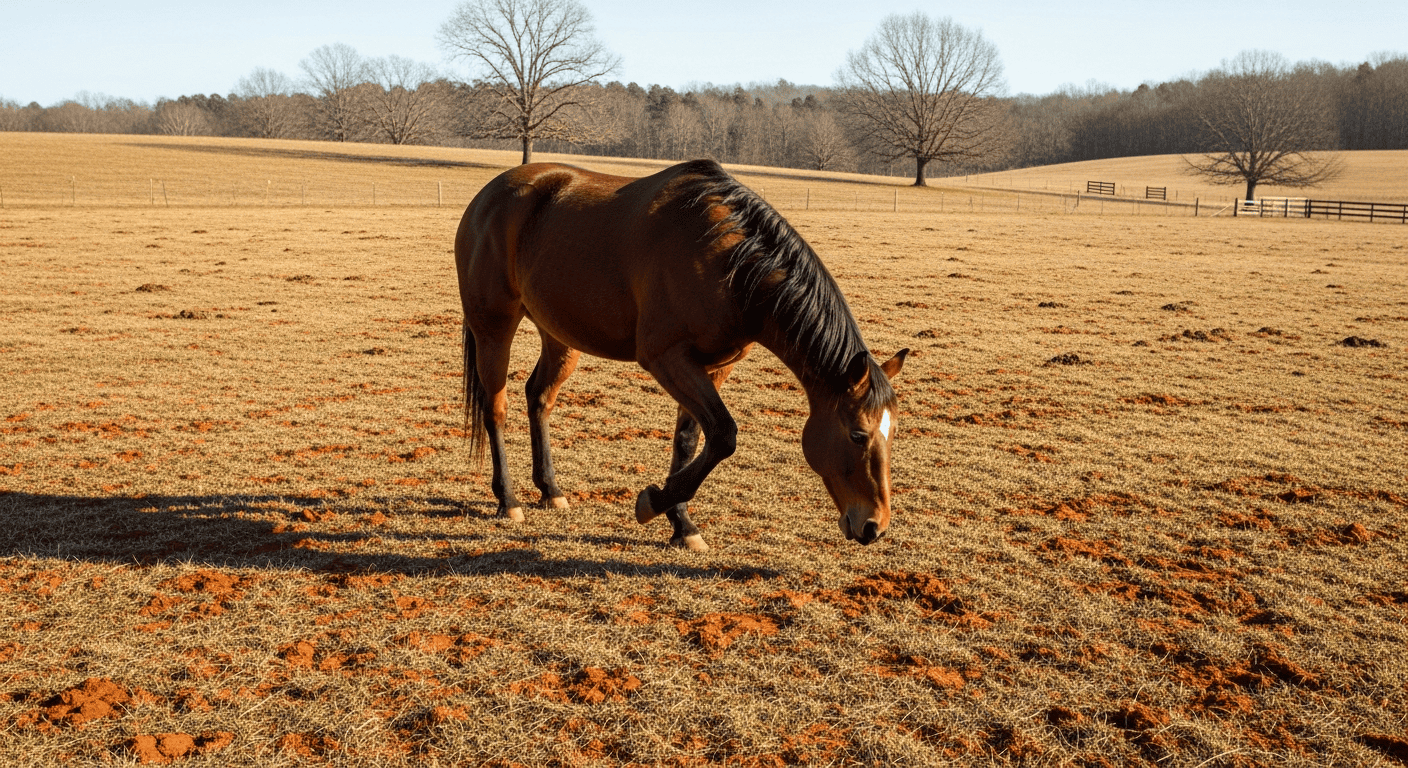
Horses, by nature, will continue to graze. They will nibble these dormant grasses down to the crown, and then they will keep going, pulling at the roots and ingesting soil and sand. This leads to three primary dangers:
- Equine Health Risks: Ingesting large amounts of low-quality, indigestible fiber along with dirt can lead to sand colic and life-threatening impaction colic. The lack of proper nutrition also forces a complete reliance on hay, which, if not of high quality, presents its own set of health challenges.
- Pasture Destruction: Grazing dormant grass down to the soil level destroys the plant’s root structure and energy reserves. This severely weakens the plant, delaying its green-up in the spring and allowing weeds to take over. You are effectively destroying your spring and summer pasture by neglecting it in the winter.
- Soil Compaction and Erosion: Hoof traffic on bare, often wet, winter ground leads to severe soil compaction. Our Georgia red clay can turn into a brick-like surface, preventing water infiltration and root growth. On slopes, this leads directly to topsoil erosion, losing your most fertile ground forever.
The Solution: Strategic Overseeding for Winter Forage
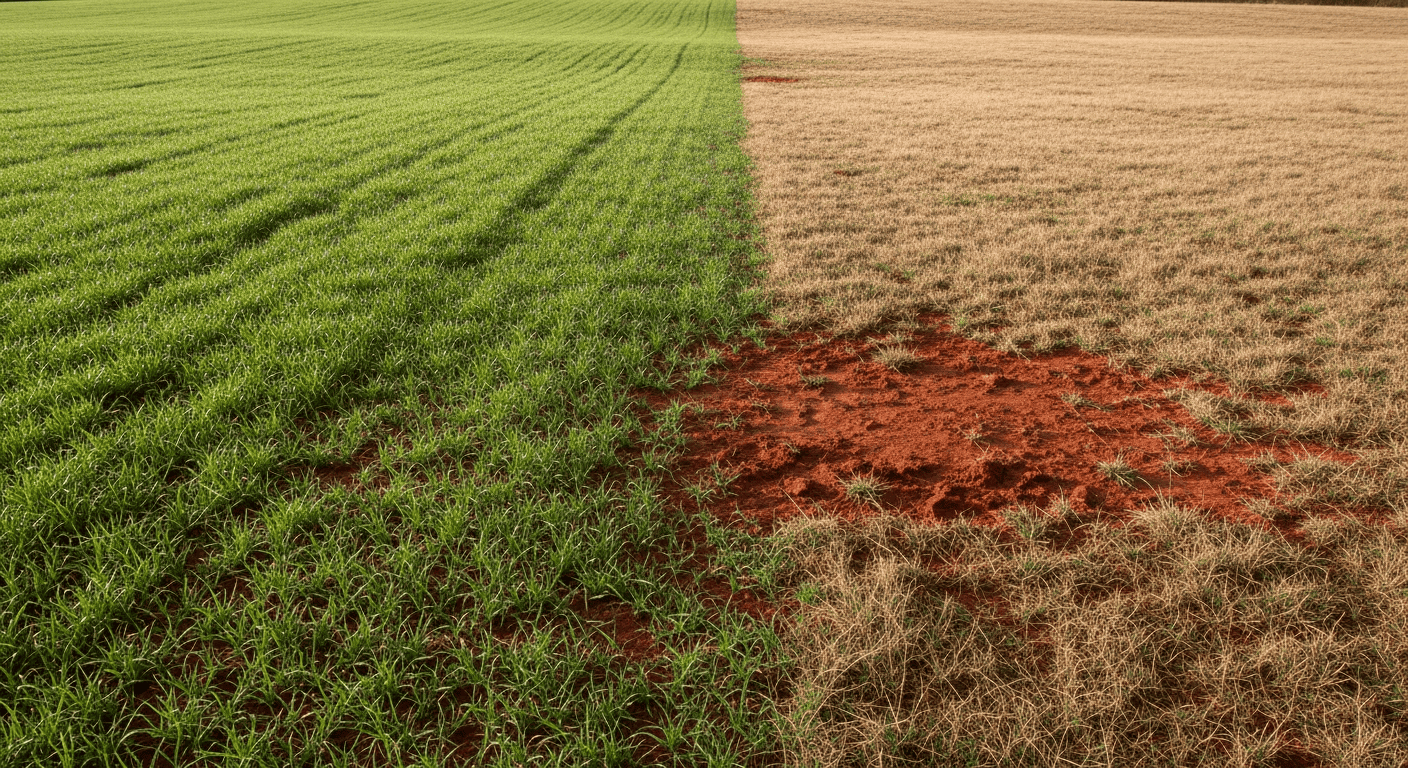
The only acceptable solution is to establish a cool-season forage crop over your dormant warm-season pasture. This process, called overseeding, provides a lush, nutritious grazing source through the winter months, protects your soil, and keeps your horses engaged in their natural grazing behavior.
Choosing Your Forage Species
Your choice of seed depends on your specific goals, soil type, and management intensity. Do not simply buy the cheapest bag of “pasture mix” you can find.
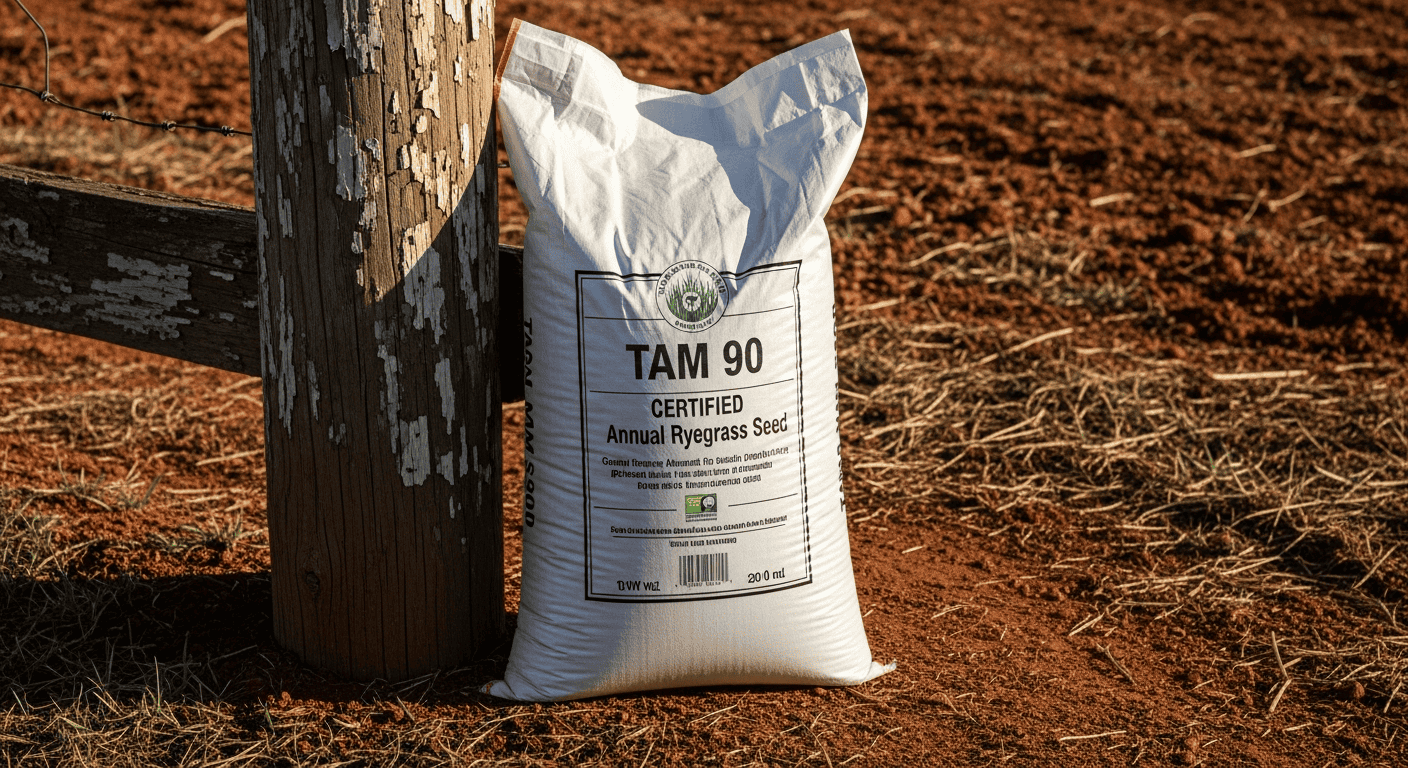
- Annual Ryegrass: This is the workhorse of winter pastures in the Southeast. It establishes quickly, is highly palatable to horses, and produces a large volume of high-quality forage. It is an annual, meaning it will die off as temperatures rise in late spring, allowing your Bermuda or Bahia to come through without competition. Do not confuse it with perennial ryegrass, which can cause issues.
- Small Grains (Oats, Wheat, Cereal Rye): These are excellent options. Oats are very palatable and produce good forage but are less cold-tolerant than rye. Cereal rye is the most cold-hardy option, making it a solid choice for the northern parts of Georgia and the Carolinas. It will continue to grow even in very cold weather.
- Legumes (Crimson or Arrowleaf Clover): I strongly recommend including a legume in your seed mix. Clovers are nutritional powerhouses, and more importantly, they perform nitrogen fixation. Specialized bacteria on their roots pull nitrogen from the air and convert it into a form plants can use. This acts as a natural fertilizer for your soil, improving the health and vigor of your primary warm-season grasses come spring.
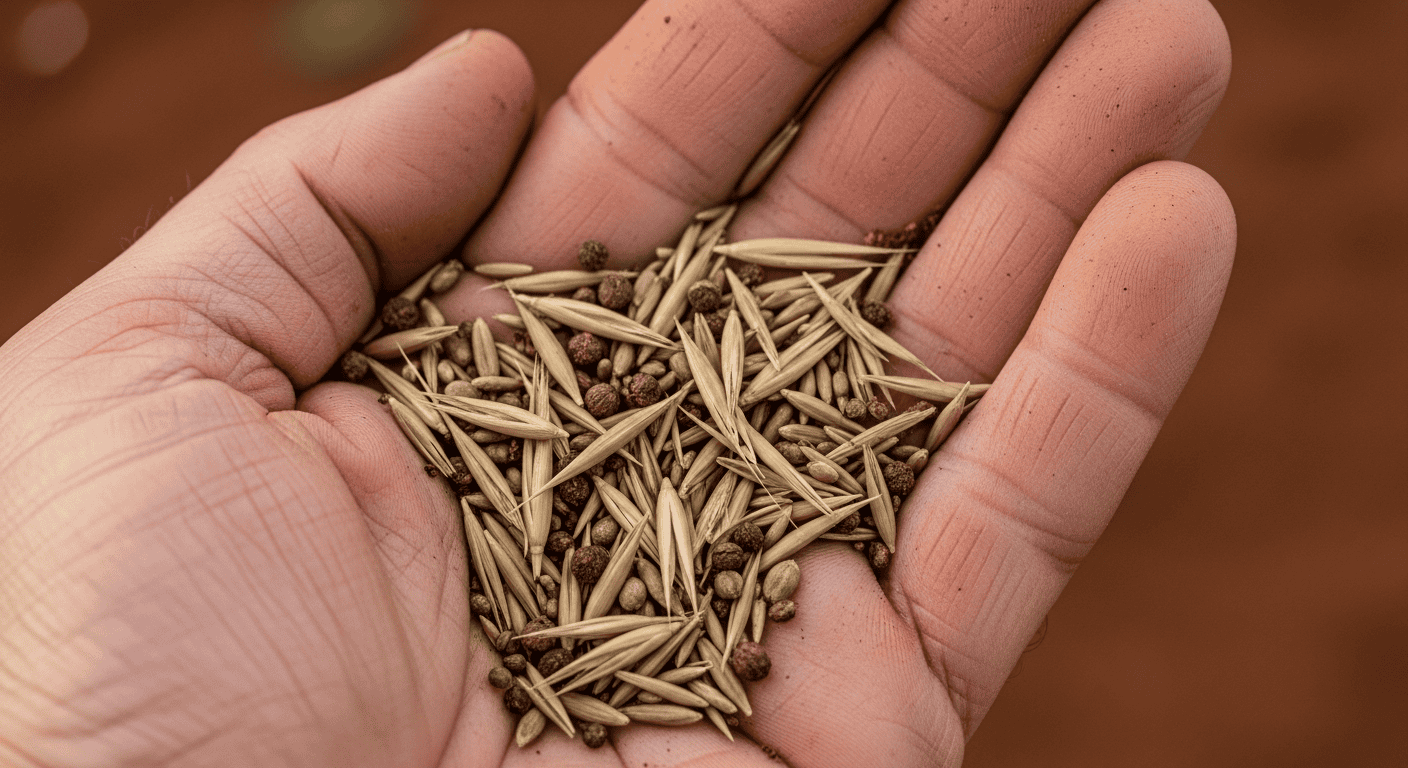
A common and effective mix for our region is 20-25 lbs of annual ryegrass, 50-60 lbs of oats or cereal rye, and 5-8 lbs of crimson clover per acre.
The Timeline: 7 Steps for Success
Success or failure is determined before a single seed hits the ground. This is a disciplined process with a strict timeline. Deviating from it will cost you time, money, and your pasture’s health.
Step 1: Soil Testing (Target: August)
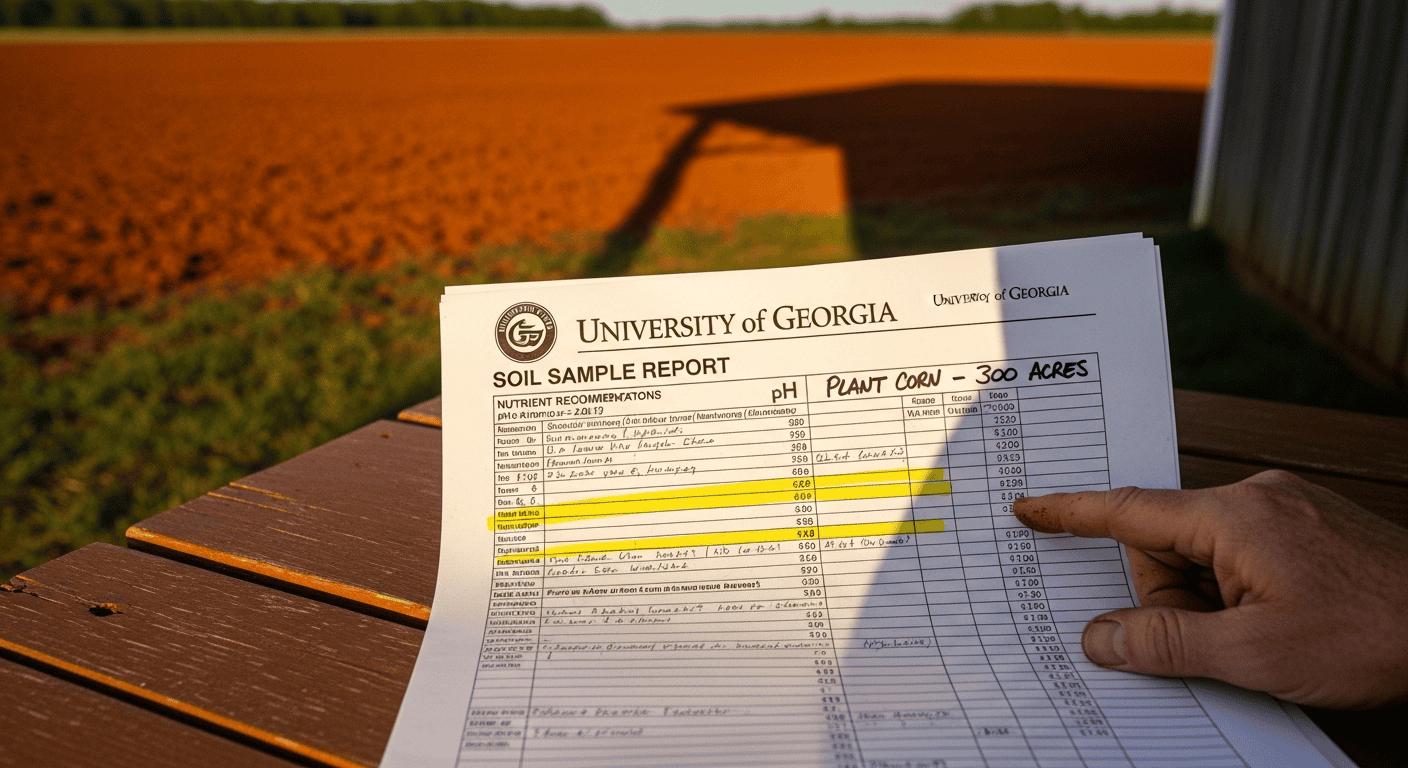
This is non-negotiable. You would not feed a horse without knowing its needs, and you cannot grow a pasture without knowing your soil’s needs. Go to your county UGA Extension office and get a soil test kit. It is inexpensive and the single most important investment you will make. Your goal for most forage mixes is a soil pH between 6.0 and 6.5. Our acidic clay soils in the Southeast almost always require lime to raise the pH. The soil test will tell you exactly how much lime and what type of fertilizer (phosphorus and potassium) you need to start building resilient soil. Apply the recommended lime immediately; it takes months to work.
Step 2: Pasture Preparation (Target: Mid-to-Late September)
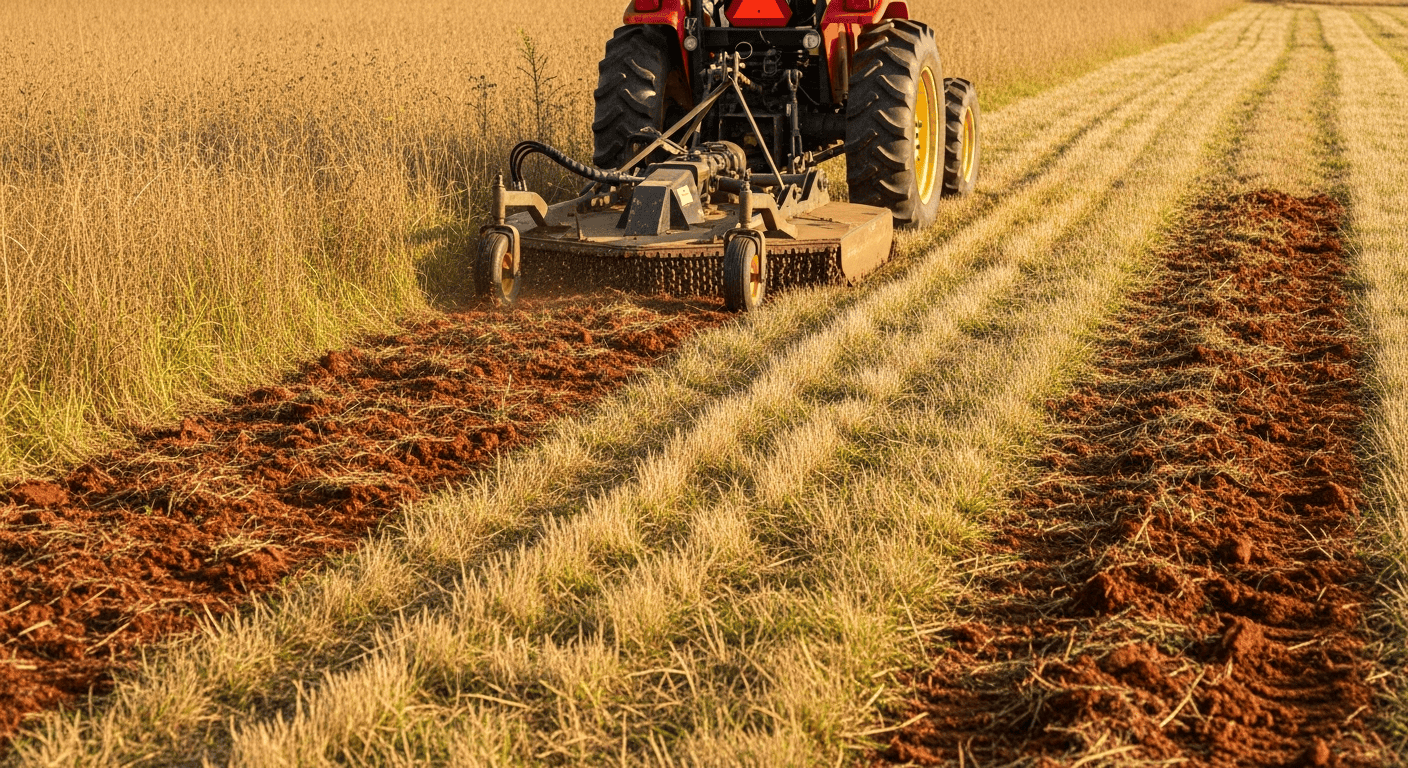
Before you seed, you must prepare the existing pasture. The goal is to reduce the competition from the dormant grass thatch so sunlight and moisture can reach the new seeds. You can do this in one of two ways:
- Mowing: Mow the pasture short, down to about 2-3 inches.
- Grazing: Allow horses to graze it down to a similar height.
Once the pasture is short, remove the horses. They will not return to this area until the new forage is fully established.
Step 3: Seeding (Target: Late September – Mid-October)
This is the critical planting window for most of the Southeast. Planting earlier means the seedlings might die in a late summer heatwave. Planting later means they may not establish a strong enough root system before the first hard frost kills them.
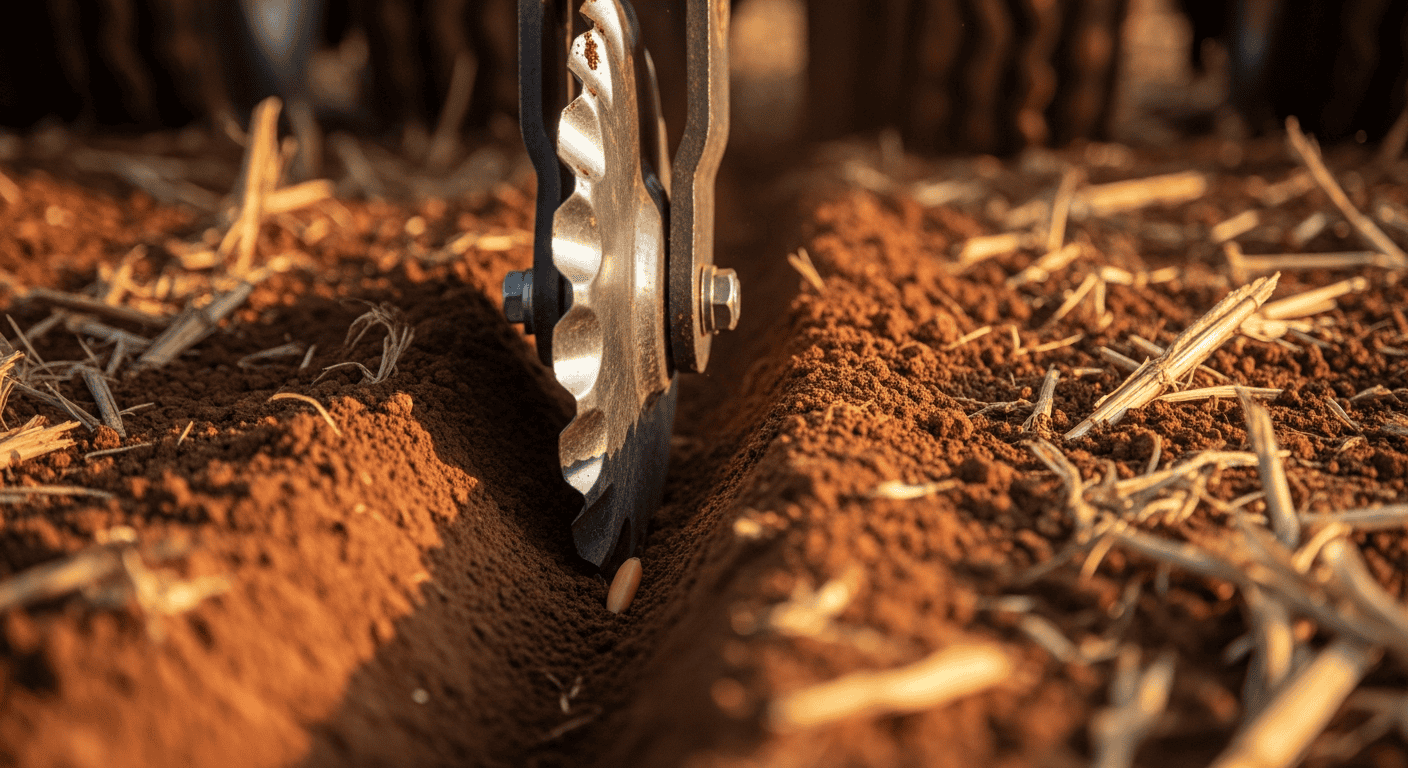
- No-Till Drill: The best method is to use a no-till drill, which you can often rent from your local conservation district. This machine cuts a small slit in the sod, drops the seed in, and covers it, ensuring excellent seed-to-soil contact.
- Broadcast Spreading: The more common method for homesteaders is broadcasting the seed with a spreader. If you use this method, you must follow it by lightly chain-harrowing or dragging the pasture to work the seeds into the soil. Simply throwing seed on top of the ground is a waste of money.
Step 4: The Waiting Game (October – December)
This is a test of patience and discipline. After seeding, you must wait. Keep horses off the pasture completely. You need adequate rainfall for germination. Once the seeds sprout, they will look like a vibrant green fuzz across your field. Do not be tempted to graze this. The young plants are dedicating all their energy to root development. Grazing them now will kill them.
Step 5: The Pull Test
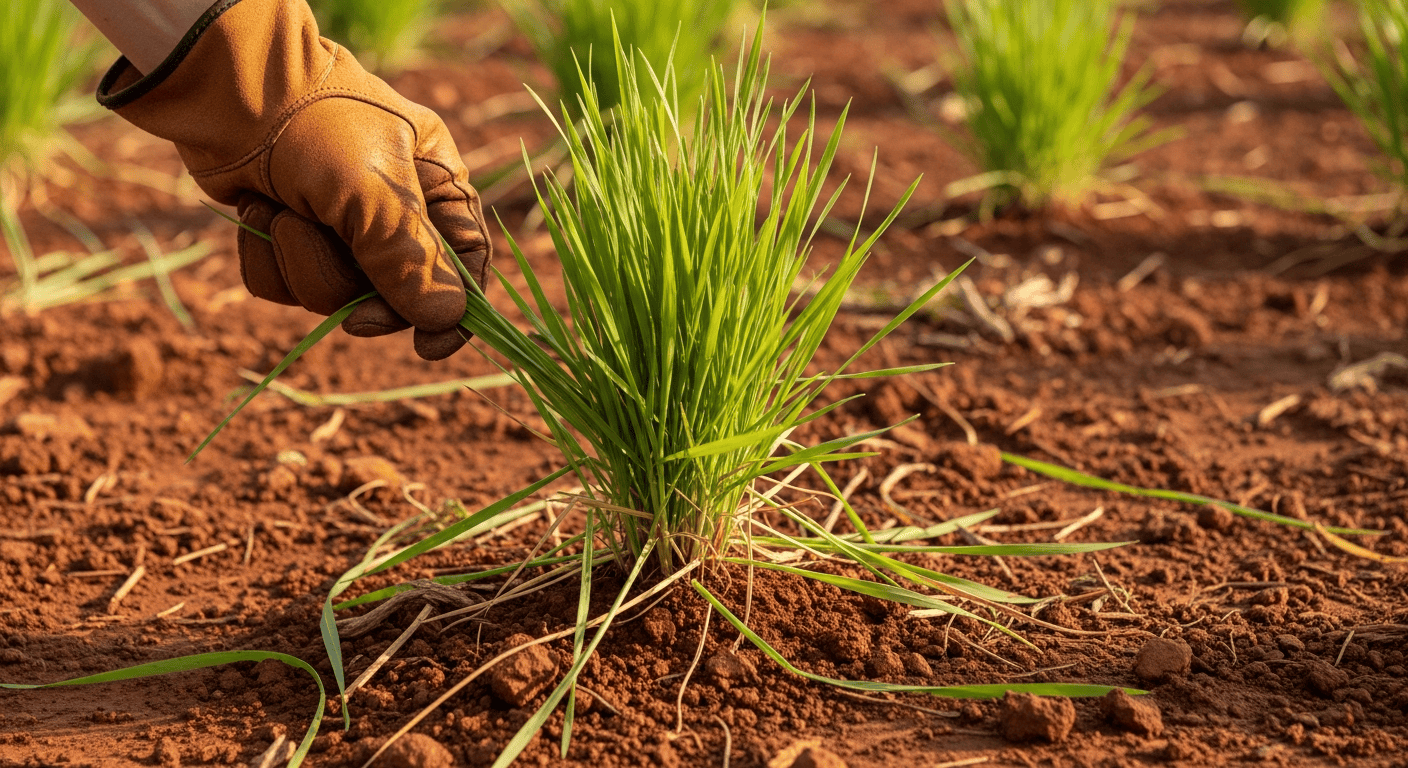
The pasture is ready for grazing only when the plants pass the “pull test.” Grab a handful of the forage and tug firmly. If the plant breaks off, leaving the roots in the ground, it is ready. If you pull the entire plant, roots and all, out of the ground, it is not ready. This typically occurs when the plants are 6-8 inches tall, usually 60-90 days after planting. For a mid-October planting, this means you can expect to begin grazing in late December or early January.
Winter Grazing Management: The Rules of Engagement
Turning horses out onto your newly established winter pasture without a strict management plan will destroy it in weeks. You have invested too much time and money to allow that to happen.
Step 6: Rotational Grazing is Mandatory
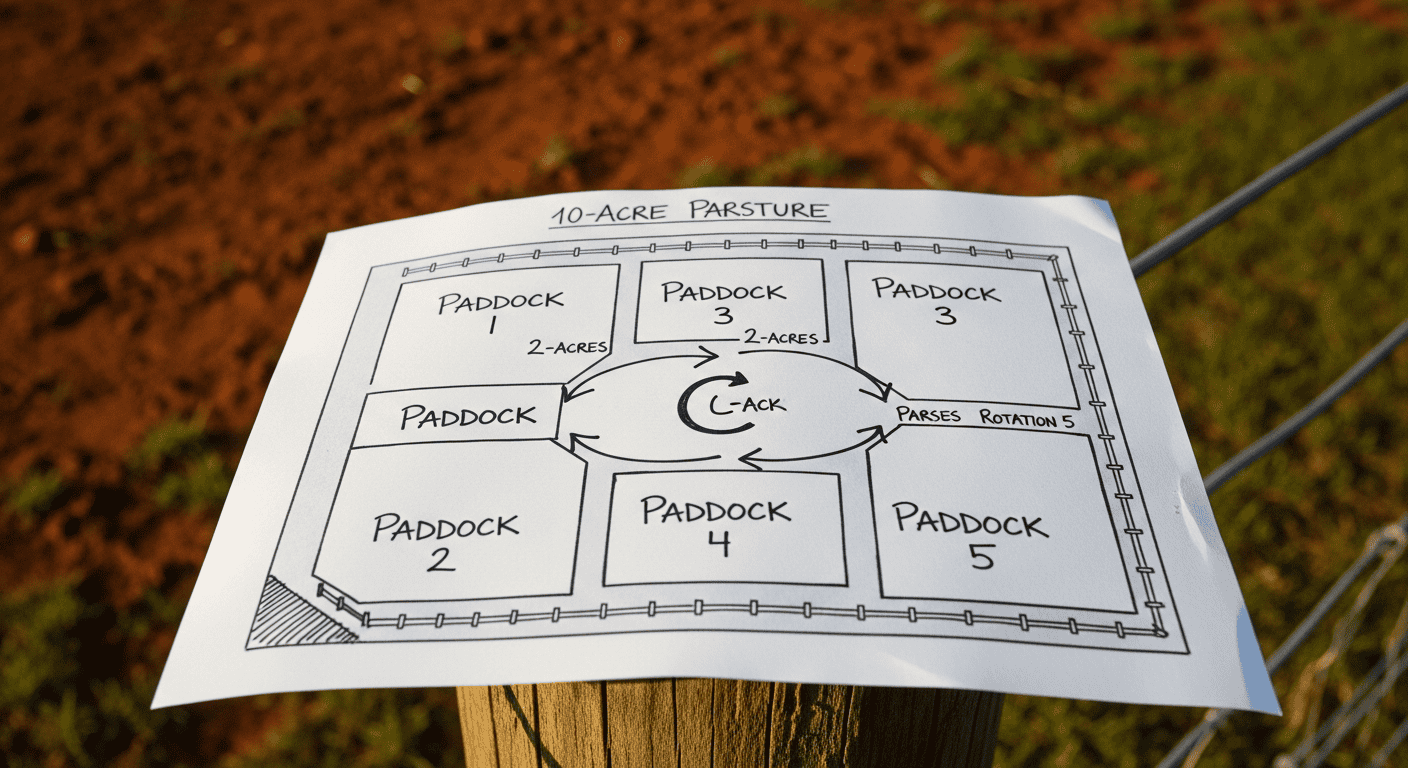
You must divide your pasture into smaller sections, or paddocks, using temporary electric fencing. The principle is simple: high-density grazing for a short duration, followed by a long rest period.
- Graze: Turn the horses into one paddock. Let them graze it down until the forage is about 3-4 inches tall. Do not let them graze it any lower.
- Move: Move the horses to the next fresh paddock.
- Rest: Allow the grazed paddock to rest and regrow. In winter, this can take 30-45 days.
This system prevents overgrazing, ensures the plants have enough leaf area left to photosynthesize and regrow quickly, and distributes manure more evenly.
Step 7: The Sacrifice Paddock: Your Pasture’s Savior
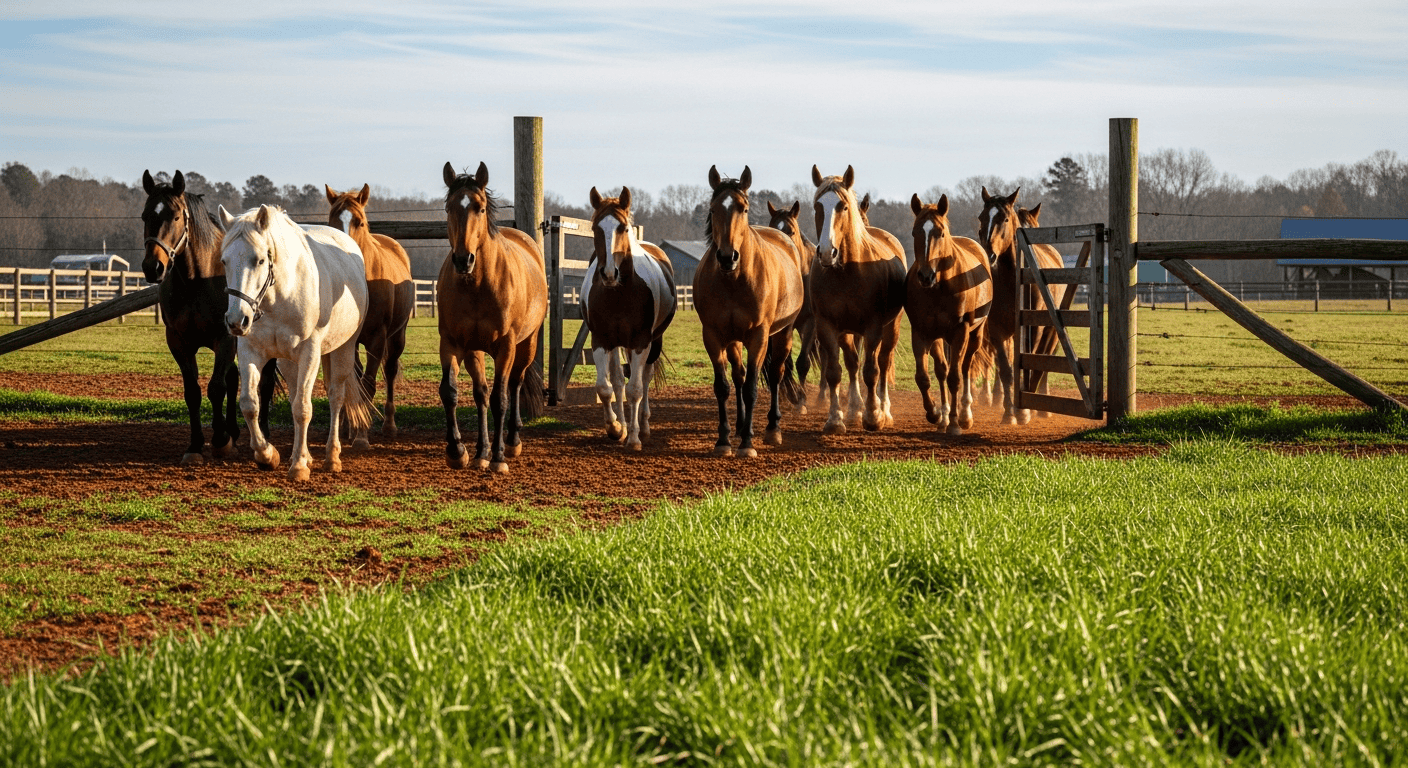
The Southeast is known for wet winters. Turning horses out on saturated soil is a cardinal sin of pasture management. Their hooves act like plungers, churning the soil into a sea of mud, compacting it, and destroying the forage you worked so hard to grow.
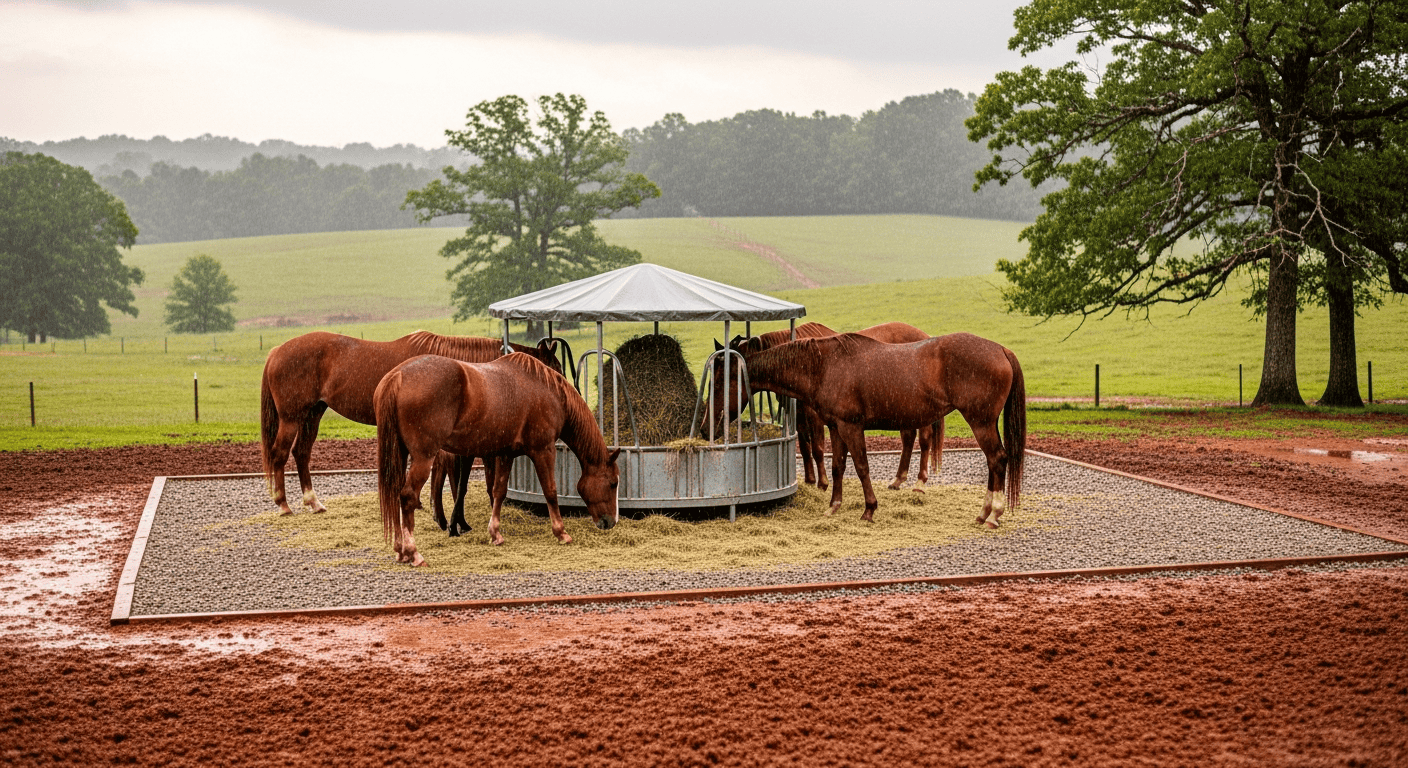
For this reason, a designated sacrifice area, or dry lot, is essential. This is an area where the horses are confined during periods of heavy rain, snow, or hard freezes.
- Location: Choose a well-drained, durable spot on your property. Learning how to improve pasture drainage is a key skill.
- Size: Clemson recommends 400-1,000 square feet per horse.
- Footing: High-traffic areas around gates, water, and hay should have all-weather footing like gravel or sand over geotextile fabric to prevent mud.
- Provisions: This is where you will provide hay and fresh water when the horses cannot be on pasture.
Using a sacrifice paddock protects the horse’s health by keeping them out of deep mud, which can cause skin infections like pastern dermatitis (scratches), and it saves your pasture from catastrophic damage.
Limited Turnout: A Practical Compromise
If a full rotational system is not feasible on your property, you can still protect your pasture by limiting turnout time. Allowing horses to graze for just 3-4 hours per day can provide them with significant nutritional and mental benefits while reducing the overall wear and tear on the pasture. Combine this with the use of a sacrifice paddock for the remainder of the day.
Conclusion
Proper winter pasture management in the Southeast is not a luxury; it is a fundamental responsibility of horse ownership. It is a system that requires planning, discipline, and an understanding of how our climate impacts our land. By testing your soil, selecting the right forages, adhering to a strict planting timeline, and implementing controlled grazing, you move from being a horse owner to a true stockman. You protect the health of your animals, prevent costly veterinary bills, reduce your dependence on hay, and act as a responsible steward of the land you call home. There are no shortcuts. Do the work, and you will be rewarded with healthy horses and a resilient homestead.
FAQ
1. Can I just throw seed out on my pasture and hope for the best?
No. This is called “frost seeding” and while it has limited success in northern climates, it is highly ineffective here in the Southeast. Our lack of consistent ground freeze-thaw cycles means the seed will just sit on the surface, where it will either be eaten by birds or rot. You must ensure good seed-to-soil contact through mowing and harrowing or using a no-till drill.
2. What’s the best seed mix for my heavy Georgia clay soil?
Annual ryegrass and cereal rye are both very tolerant of our heavy clay soils. I highly recommend including crimson clover in the mix. Its strong taproot can help break up compacted clay over time, and the nitrogen it adds is crucial for soil health.
3. How much hay will I actually save by planting a winter pasture?
This varies based on stocking density and weather, but it’s not uncommon for a well-managed winter pasture to reduce hay needs by 50-75% from January through April. The savings on hay costs can often pay for the seed and fertilizer in a single season.
4. Is annual ryegrass safe for all horses?
Annual ryegrass is very high in sugar content, especially during periods of rapid growth on sunny, frosty mornings. For horses with metabolic issues like Insulin Resistance, Cushing’s Disease, or a history of laminitis, unrestricted access can be dangerous. For these horses, use a grazing muzzle or limit grazing time to the early morning hours after the sugars stored overnight have been used for growth.
5. What if I miss the mid-October planting window?
You can still attempt to plant as late as early November, but your risks increase significantly. The later you plant, the less time the seedlings have to establish before cold weather halts growth. Your first grazing will be delayed, and the overall forage yield will be lower. It’s better to try late than not at all, but do not expect the same results.
6. How do I manage mud in my sacrifice paddock?
The key is to install a high-traffic pad in the most used areas. Scrape away 4-6 inches of topsoil, lay down a layer of geotextile fabric, and cover it with 4-6 inches of dense grade aggregate or crushed gravel. This creates a stable, well-drained surface that prevents mud. Also, ensure the area has a slight slope to drain away from feeders and shelters.
7. Why is a soil test so important? Can’t I just use a standard fertilizer?
Applying fertilizer without a soil test is like giving a horse medication without a diagnosis. You will waste money applying nutrients your soil doesn’t need and fail to apply the ones it’s critically lacking. Most importantly, if your soil pH is too low (acidic), the plants cannot absorb the nutrients even if they are present. Applying lime based on a soil test is the most critical step.
8. What’s the difference between annual and perennial ryegrass for horses?
Annual ryegrass completes its life cycle in one season and dies off in the summer heat, which is what you want for overseeding. Perennial ryegrass can survive for several years, but many varieties host an endophyte fungus that can be toxic to horses, causing reproductive issues in mares and other health problems. Always use a certified endophyte-free perennial ryegrass if you must, but for overseeding warm-season pastures, annual ryegrass is the correct and safer choice.
9. How do you recommend fertilizing the new winter pasture?
Follow the recommendations from your soil test. Typically, you will apply the required phosphorus (P) and potassium (K) at or before planting. Nitrogen (N) is what drives leafy growth. Apply a portion of the recommended nitrogen about 3-4 weeks after the seeds have germinated to encourage growth, and another light application in late winter (February) to boost spring production.
10. Can I graze other livestock, like goats or cattle, with my horses on this pasture?
Yes, and this can be beneficial. This practice, known as multi-species grazing, can improve pasture health. Cattle and horses have different grazing patterns, and goats will browse on weeds that horses ignore. If you’re new to goats, check out this essential guide on how to raise goats. However, you must be aware of feed and mineral requirements, as some minerals for cattle can be toxic to horses and vice-versa.
Sources
- University of Georgia (UGA) Extension – Forage Systems for Horses in Georgia: https://extension.uga.edu/publications/detail.html?number=B1224&title=Forage+Systems+for+Horses+in+Georgia
- Clemson University – Rotational Grazing for Horses: https://blogs.clemson.edu/livestock/rotational-grazing-for-horses/
- North Carolina State (NCSU) Extension – Planting Guide for Forage Crops in North Carolina: https://content.ces.ncsu.edu/planting-guide-for-forage-crops-in-north-carolina