
7 Proven Ways to Stop the Squash Vine Borer in Georgia
By Dr. Elena Vance, Lead Horticulturist
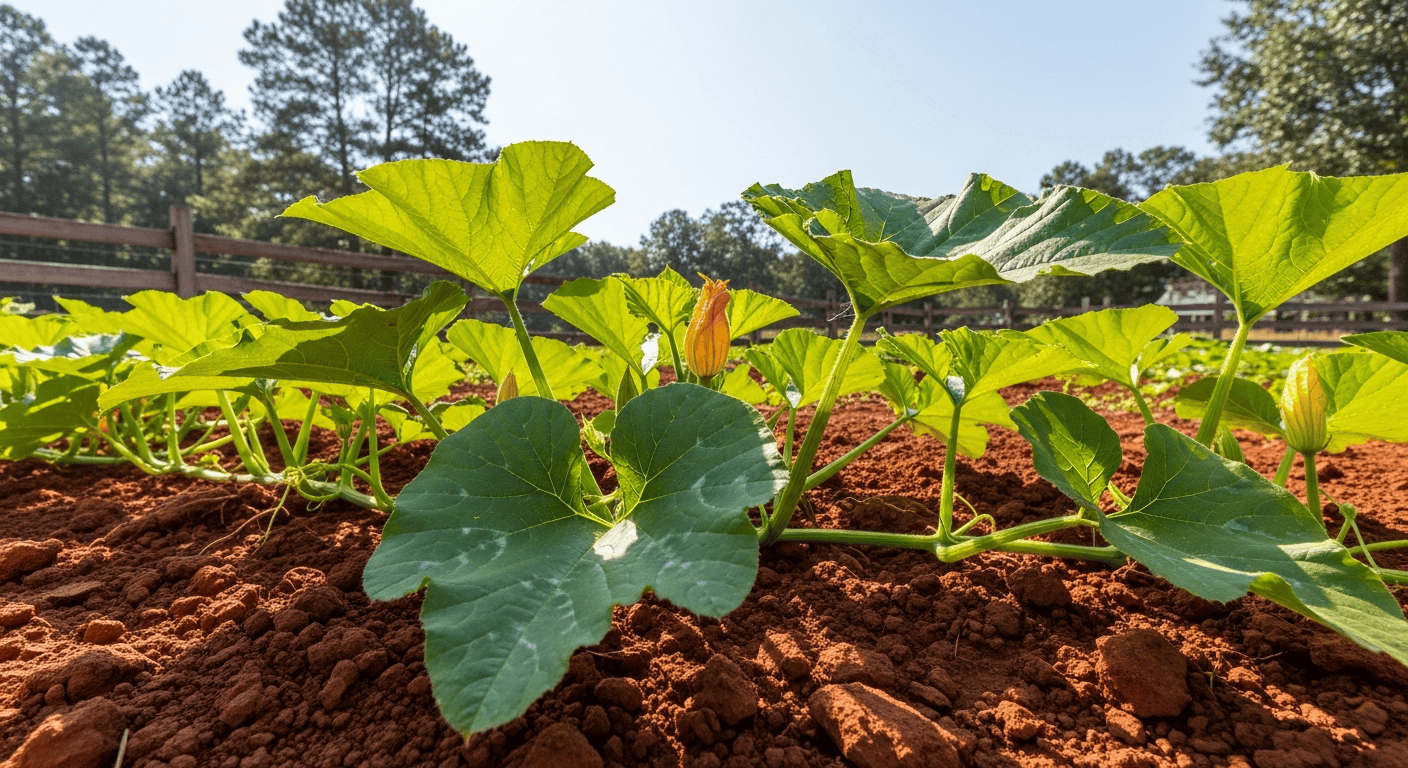
There are few heartbreaks in the garden quite as swift as the squash vine borer. One day, you have a magnificent, sprawling zucchini plant, full of promise. The next, it’s wilted under the Georgia sun. No amount of water will save it, because the enemy is already inside. For over 30 years, I’ve seen this tiny pest fell the mightiest of summer squash plants, but this is a winnable war. Successfully stopping the squash vine borer in Georgia simply requires strategy, precise timing, and a deep understanding of the pest.
This guide is your comprehensive battle plan. We will move beyond generic advice and focus on the specific timing, resistant varieties, and integrated techniques that work right here, from the foothills of the Blue Ridge to the coastal plains. We will learn to think like the pest, anticipate its moves, and fortify our gardens against its inevitable arrival.
Key Takeaways
- Timing is Non-Negotiable: The critical window for prevention in Georgia is from late May through early June. This is when adult moths emerge and lay eggs. All preventative measures must be in place before this period begins.
- Variety Selection is Your Strongest Defense: The single most effective strategy is planting squash species with dense, solid stems. Vining squashes from the Cucurbita moschata family (like Butternut and Cushaw) are highly resistant.
- An Integrated Approach is Essential: Relying on a single method is a recipe for failure. The best defense combines physical barriers, vigilant sanitation, smart planting schedules, and, only when necessary, targeted treatments.
An Integrated Pest Management Strategy
Step 1: Know Your Enemy: The Squash Vine Borer in Georgia
Before we can defeat an enemy, we must understand it. The Squash Vine Borer is not a beetle; it is the larval stage of a deceptive moth. Understanding its life cycle is the key to breaking it.
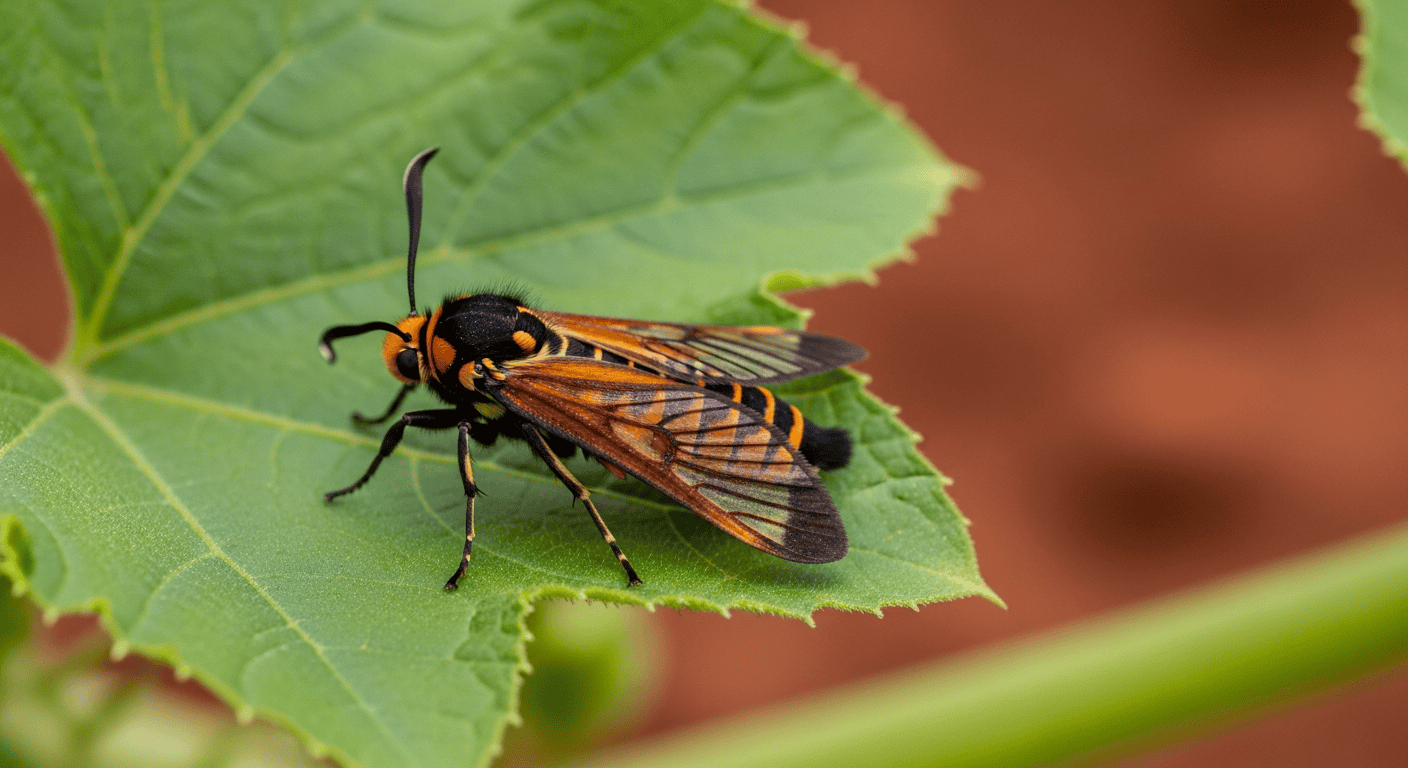
The Adult Moth: The adult is a “clearwing” moth, Melittia cucurbitae, that is active during the day. It is a stunning, yet sinister, insect that looks remarkably like a wasp. From late May into June, these moths emerge from the soil where they overwintered. They fly low and fast around the base of squash plants, seeking the perfect place to lay their eggs.
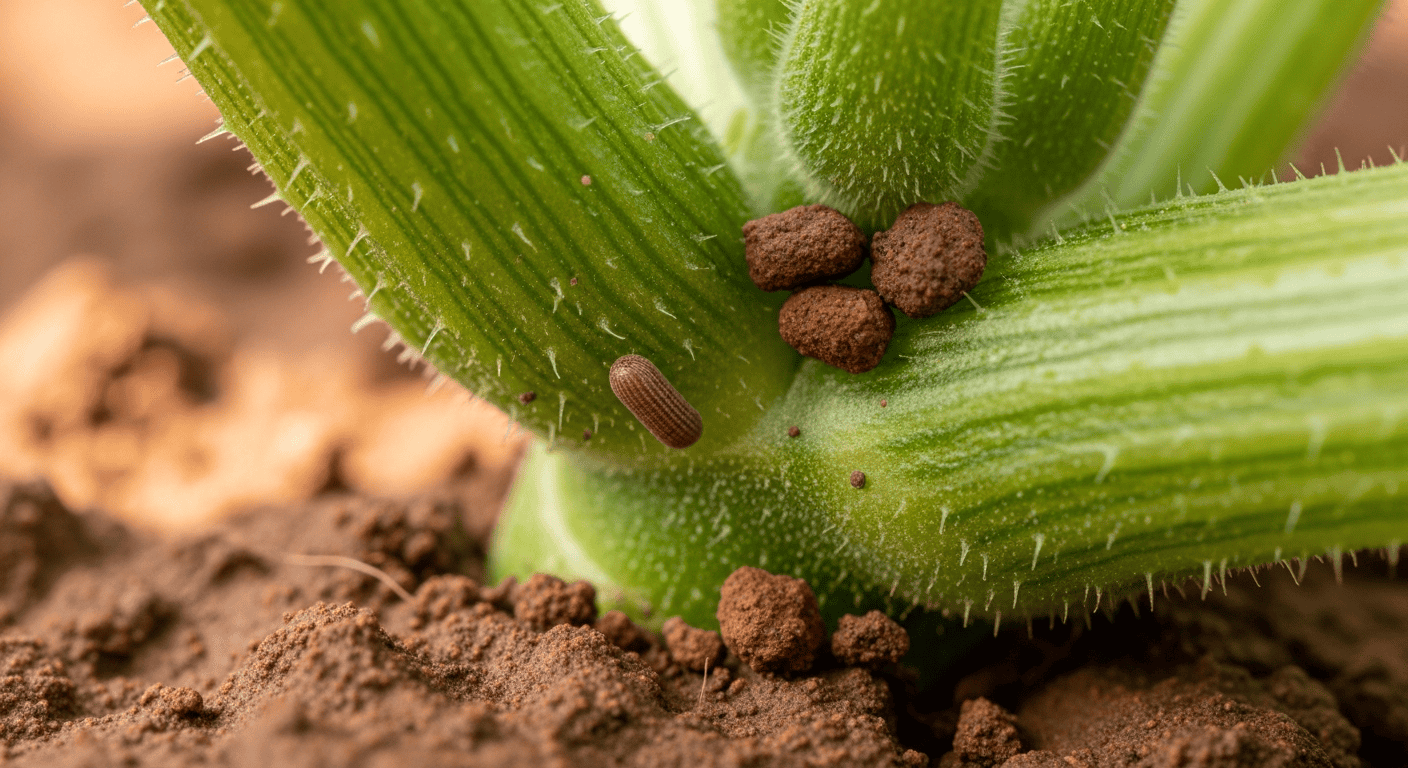
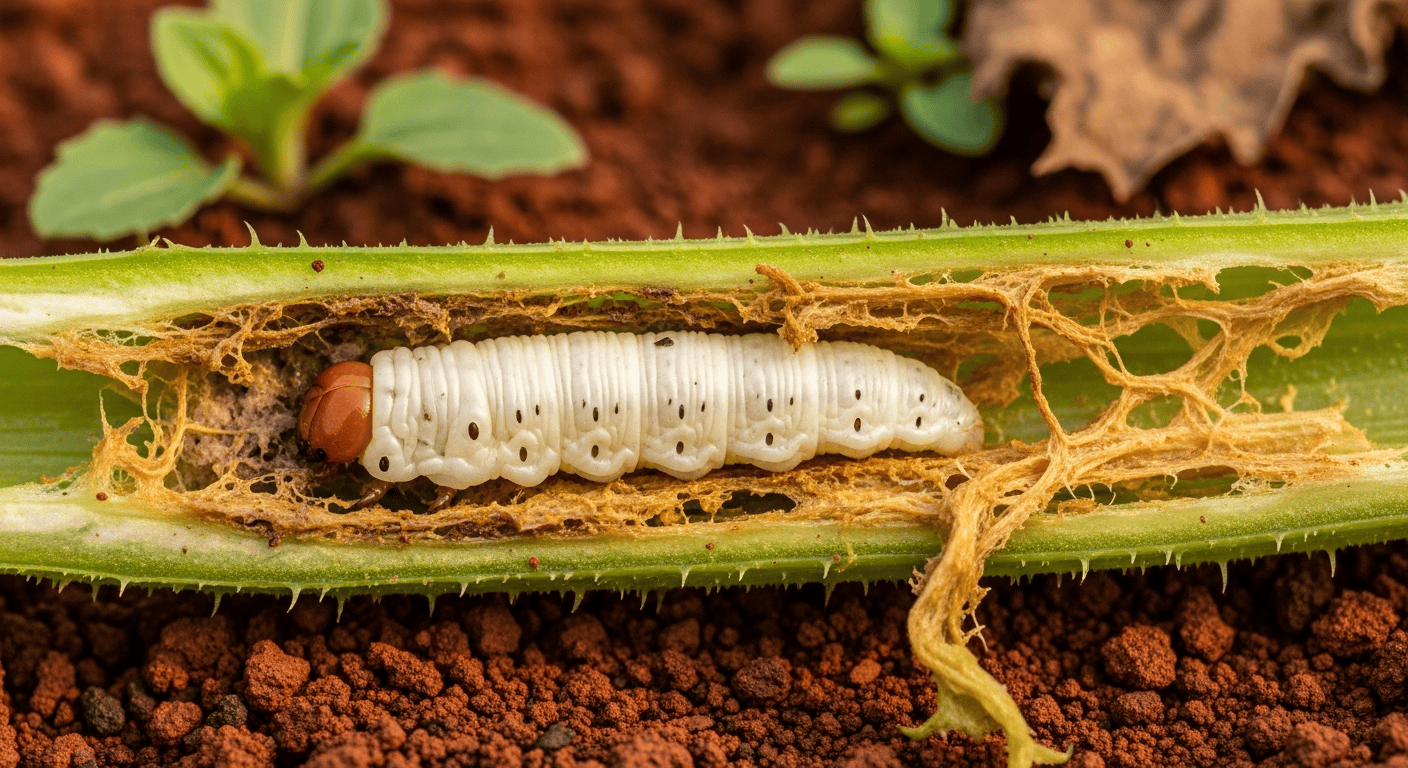
The Eggs and Larva: The female moth lays tiny, flat, brown eggs individually at the base of squash stems. In about a week, a tiny larva bores its way into the stem. The larva, a creamy-white grub, will spend the next 4 to 6 weeks inside the stem, eating the plant’s vascular tissue. This severs the pathways that transport water and nutrients, killing the plant from the inside out.
The Life Cycle in Georgia:
1. Overwintering: The borer spends winter as a pupa in a cocoon, one to two inches deep in the soil.
2. Emergence: When soil temperatures warm in late spring (late May for most of Georgia), the adult moths emerge.
3. Egg-Laying: Moths immediately begin laying eggs. This is our primary window for intervention.
4. Larval Stage: The larvae hatch, enter the stems, and feed for several weeks, causing the plant to wilt and die.
5. Pupation: The mature larva exits the stem, burrows into the soil, and pupates, ready for a second generation or to overwinter.
Step 2: Diagnose an Infestation
The first symptom is often mistaken for heat stress, which can be a fatal error.
- Sudden Wilting: A plant looks healthy in the morning and is completely wilted by the afternoon. If the soil is moist and the plant doesn’t recover in the evening, suspect borers.
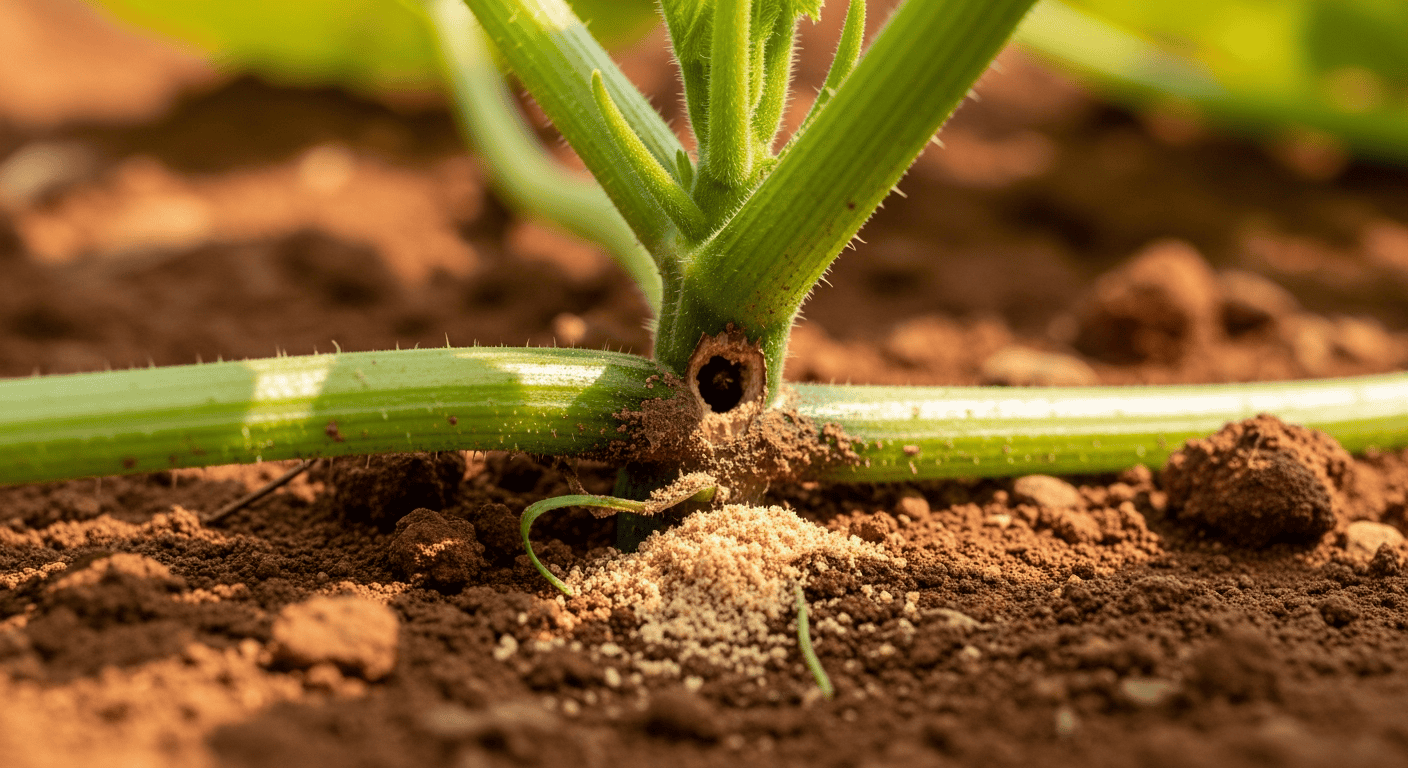
- Frass at the Base: Look closely at the stem near the soil line. The borer’s entry point will be marked by a pile of greenish-yellow, sawdust-like material called “frass.”
- The Entry Hole: If you gently brush away the frass, you will find a small hole in the stem.
Step 3: Choose Resistant Varieties
This is, without question, the most powerful tool in your arsenal. Borers prefer plants in the Cucurbita pepo species (hollow stems) and struggle with the dense, solid stems of the Cucurbita moschata species.
-
Highly Susceptible Varieties (Cucurbita pepo):
- Zucchini (all common varieties)
- Yellow Crookneck and Straightneck Squash
- Patty Pan or Scallop Squash
- Most Pumpkins
-
Highly Resistant Varieties (Cucurbita moschata):
- Waltham Butternut: The gold standard for borer resistance.
- Green-Striped Cushaw: A large, delicious heirloom with excellent resistance.
- Long Island Cheese Pumpkin: A fantastic heirloom for pies and roasting.
- Seminole Pumpkin: A vigorous, heat-tolerant variety that thrives in the Southeast.
If you want a reliable harvest of delicious squash with minimal fuss, make Cucurbita moschata varieties the foundation of your garden plan.

Step 4: Use Smart Planting Strategies
The borer’s life cycle is predictable. We can use this to our advantage.
- Succession Planting: The main flight of borer moths subsides by early July. By planting a second crop of summer squash around the first or second week of July, you can often get a beautiful fall harvest after the peak egg-laying period has passed.
- Delayed Planting: Forgoing an early crop and waiting until late June or early July to plant your main squash crop can also be very effective. This strategy works well with other garden tactics, like those found in our guide on How to Incorporate Companion Planting in Your Garden.

Step 5: Create Physical Barriers
Since the moth lays eggs on the first few inches of the stem, we can block her access. This must be done at planting time, well before late May.
- Aluminum Foil: Carefully wrap a 6-inch square of aluminum foil around the base of the stem, starting an inch below the soil line and extending 3-5 inches up.
- Nylon Stockings: A small piece of a nylon stocking can be used in the same way, creating a breathable but effective barrier.
- Floating Row Covers: Cover young plants entirely with a lightweight floating row cover. You MUST remove the covers once plants begin to flower to allow for pollination.

Step 6: Practice Garden Sanitation
A clean garden is a healthy garden. The borer pupae overwinter in the soil where you grew squash last year.
- Crop Rotation: Never plant squash in the same spot two years in a row.
- Fall Cleanup and Tilling: As soon as a vine is infested, pull it out and destroy it. Do not compost it. In the fall, tilling the garden bed can expose overwintering pupae to cold and predators.
- Build Healthy Soil: A robust plant is better able to withstand stress. For more on this, see our article on Improving Soil Health with Soil Amendments. Amending our Georgia clay with plenty of organic compost is always the first step.
[IMAGE_PROMPT: A garden bed in late autumn, freshly tilled after the removal of all summer vegetable debris, showing the dark, amended soil ready for winter.]
Step 7: Intervene Actively When Needed
Despite our best efforts, sometimes a borer gets through. If you catch it early, you may be able to save the plant.
Manual Removal: Garden Surgery
This method is best attempted at the first sign of frass, before the plant wilts.
- Locate the Borer: Identify the entry hole and feel for a soft spot on the stem.
- Make the Incision: Using a sharp, clean razor blade, make a shallow, vertical slit along the stem.
- Extract the Pest: Gently pry the vine open and remove the larva with tweezers.
- Close the Wound: Mound moist soil over the slit portion of the vine to encourage new roots.
[IMAGE_PROMPT: A gardener’s hands carefully performing surgery on a squash vine. One hand holds a scalpel making a precise incision, while the other gently holds the vine steady.]
Chemical Controls: A Targeted Approach
This is a last resort, but it can be necessary for susceptible varieties.
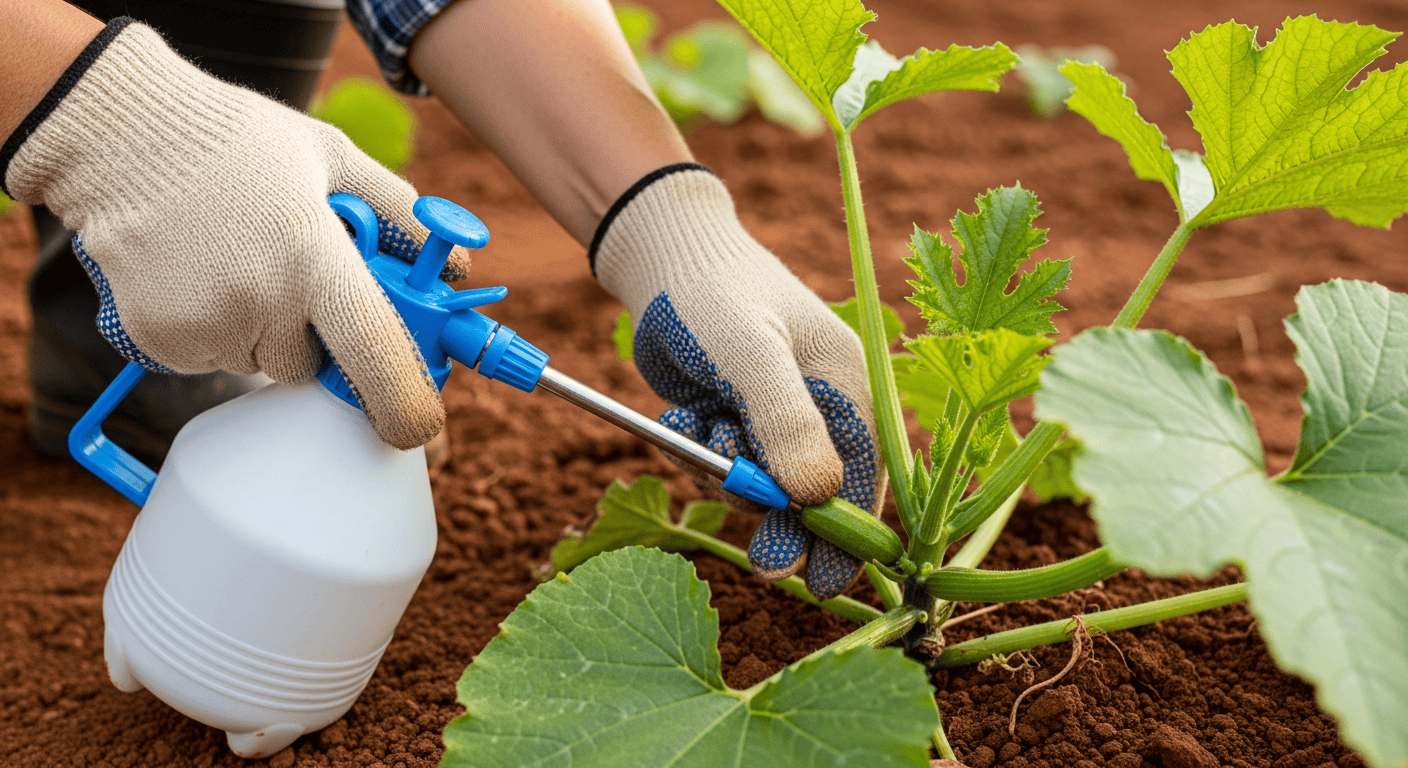
- Conventional Insecticides: Products containing permethrin or bifenthrin are effective. They must be applied directly to the base of the stems. Spraying leaves is useless and harms pollinators.
- Application Schedule: Begin applications in late May in Georgia. Reapply every 7 to 10 days for several weeks. Always follow the label directions.
- Organic Options: Options like Spinosad or Bt have limited effectiveness. A product like kaolin clay (Surround WP) can be used to create a particle film barrier on the stems that deters egg-laying.
Conclusion: A Harvest Earned
Defeating the squash vine borer in a Georgia garden is about a thoughtful, integrated strategy. By choosing resistant varieties, you can almost eliminate the problem. For beloved zucchinis, you must be a vigilant gardener. Wrap your stems, watch for the moth in late May, and be prepared to act. A bountiful squash harvest is one of the great joys of a southern summer, and with this knowledge, it is a joy you can achieve.
Frequently Asked Questions (FAQ)
1. When exactly do squash vine borers appear in Georgia?
In most of Georgia (Zones 7b-8b), adult moths emerge and lay eggs from late May through early June. This is the most critical period for prevention.
2. What does the squash vine borer moth look like?
It looks like a red and black wasp. It has a black body with orange-red markings and clear hind wings. It is active during the day.
3. Can a squash plant survive a borer attack?
If you perform surgery to remove the larva before the plant wilts severely, it has a chance. Once significant wilting occurs, recovery is unlikely.
4. Are there any truly resistant zucchini varieties?
No, all common zucchini are highly susceptible. However, ‘Tromboncino’ (technically a C. moschata) grows like a vining zucchini and is highly resistant.
5. Does wrapping the stem in aluminum foil really work?
Yes, it is a surprisingly effective physical barrier that prevents the moth from laying eggs on the stem. It must be applied before the moths emerge.
6. Will tilling my garden in the fall get rid of the borers?
Tilling can significantly reduce the population for the following year by exposing the overwintering pupae to cold and predators.
7. What is the best organic spray for squash vine borers?
Prevention is the most effective organic approach. Some gardeners have limited success by coating stems with a slurry of kaolin clay (Surround WP) to deter egg-laying.
8. Why are my butternut squash fine but my zucchini get destroyed?
Butternut squash (Cucurbita moschata) has dense, solid stems that the borer larvae cannot easily penetrate. Zucchini (Cucurbita pepo) has hollow stems, which are ideal for the pest.
9. How do I perform surgery on my squash vine?
Use a sterile blade to make a vertical slit along the vine. Cut only deep enough to open the hollow center. Remove the larva with tweezers, then bury the wounded section with moist soil.
10. Can I just keep my plants under row covers all season?
You can, but you will get no fruit unless you hand-pollinate the flowers, as bees will not be able to reach them.
Sources
- UGA Extension – Home Garden Squash: https://extension.uga.edu/publications/detail.html?number=C1075
- UGA Extension (Colquitt County) – Squash Vine Borer: https://site.extension.uga.edu/colquitt/2022/05/squash-vine-borer/
- Southeastern U.S. Vegetable Crop Handbook (UGA): https://extension.uga.edu/publications/detail.html?number=B1381