A Georgia Farmer’s Guide to Protecting Fruit Trees from Late Frosts
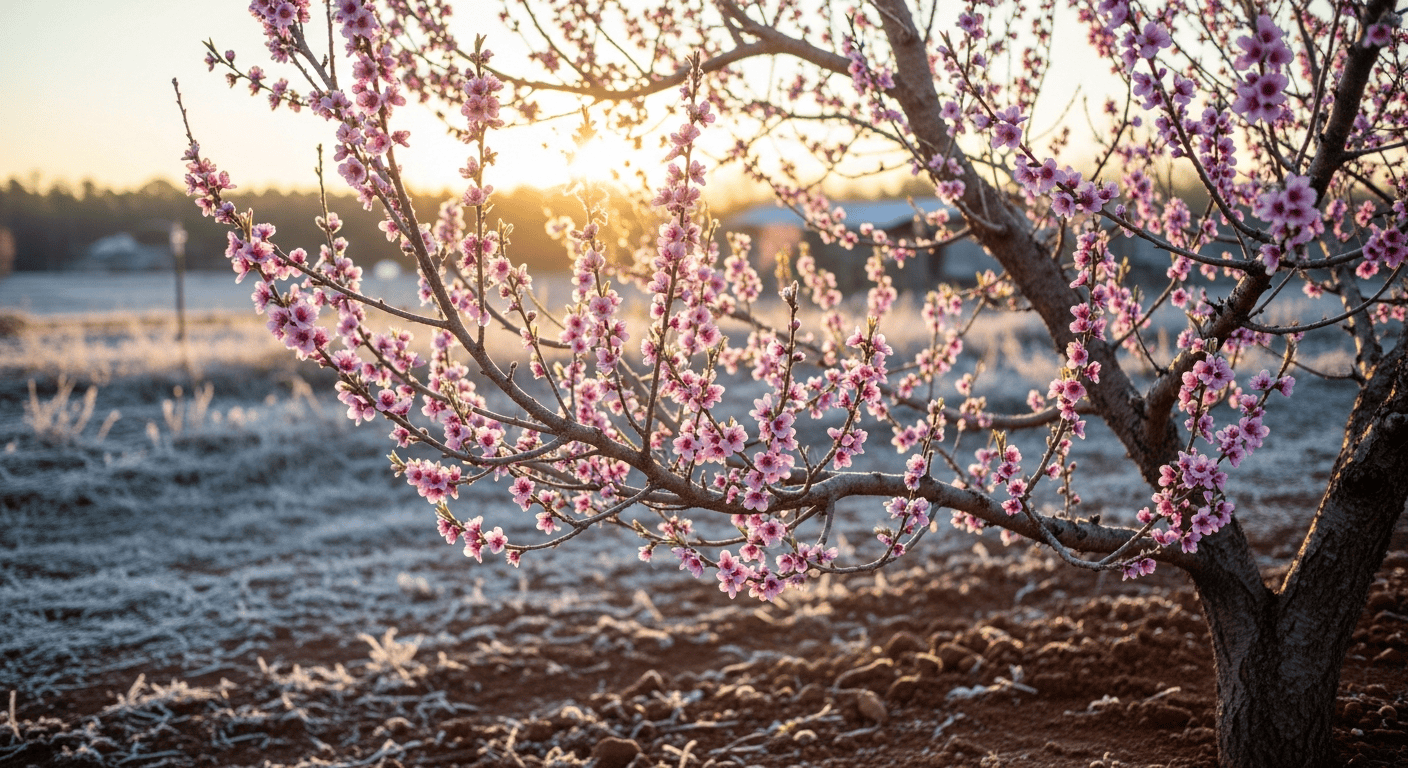
Well, howdy neighbor. There are few things in this world as hopeful as a fruit tree in Forsyth County, Georgia, waking up in late winter. You see those buds start to swell, a little pink peeking through, and you can already taste the summer peaches. Then you check the forecast. A cold snap is coming. There’s nothing that’ll make a Georgia grower’s heart sink faster than seeing a beautiful flush of blossoms followed by a forecast with a “2” in front of it. We’ve all been there, and the heartbreak of losing an entire crop to one cold night is real. This guide is here to turn that anxiety into a plan, giving you the practical, no-nonsense steps to protect your backyard orchard and save your harvest.
Key Takeaways
- Know Your Critical Temperatures: The survival of your fruit depends on the blossom’s stage of development. Damage can start at 25°F for swelling buds, 27°F for open flowers, and 28°F for tiny, newly formed fruit. Monitor the forecast like a hawk when your trees are in these vulnerable stages.
- Covering is Your Best Defense: For the home grower, the most effective method is to cover your trees before sunset on the night of a predicted frost. Use blankets or frost cloths that reach the ground to trap radiant heat from the soil. A simple frame to keep the cover off the delicate blossoms is essential.
- Choose the Right Tree for Georgia: Your best long-term strategy is planting varieties known for late blooming or frost-hardy blossoms. Cultivars like ‘Jefferson’ and ‘Redskin’ peaches are excellent choices for our unpredictable Georgia springs.
The Deep Dive
Understanding the Enemy: When Frost Becomes Fatal
Here in Georgia, we get what’s called a “false spring” more often than not. A week of 70-degree weather in February can trick our trees into waking up early, putting them right in the path of a March or even April cold snap. But not all cold is equally dangerous. The specific temperature that causes damage is entirely dependent on how far along your tree’s blossoms are.
Think of it like this: a tightly closed bud is a sleeping baby, bundled up and safe. An open blossom is a toddler who’s thrown off all the blankets.
Here are the numbers you need to burn into your memory. When the forecast dips to these temperatures, it’s time for action.
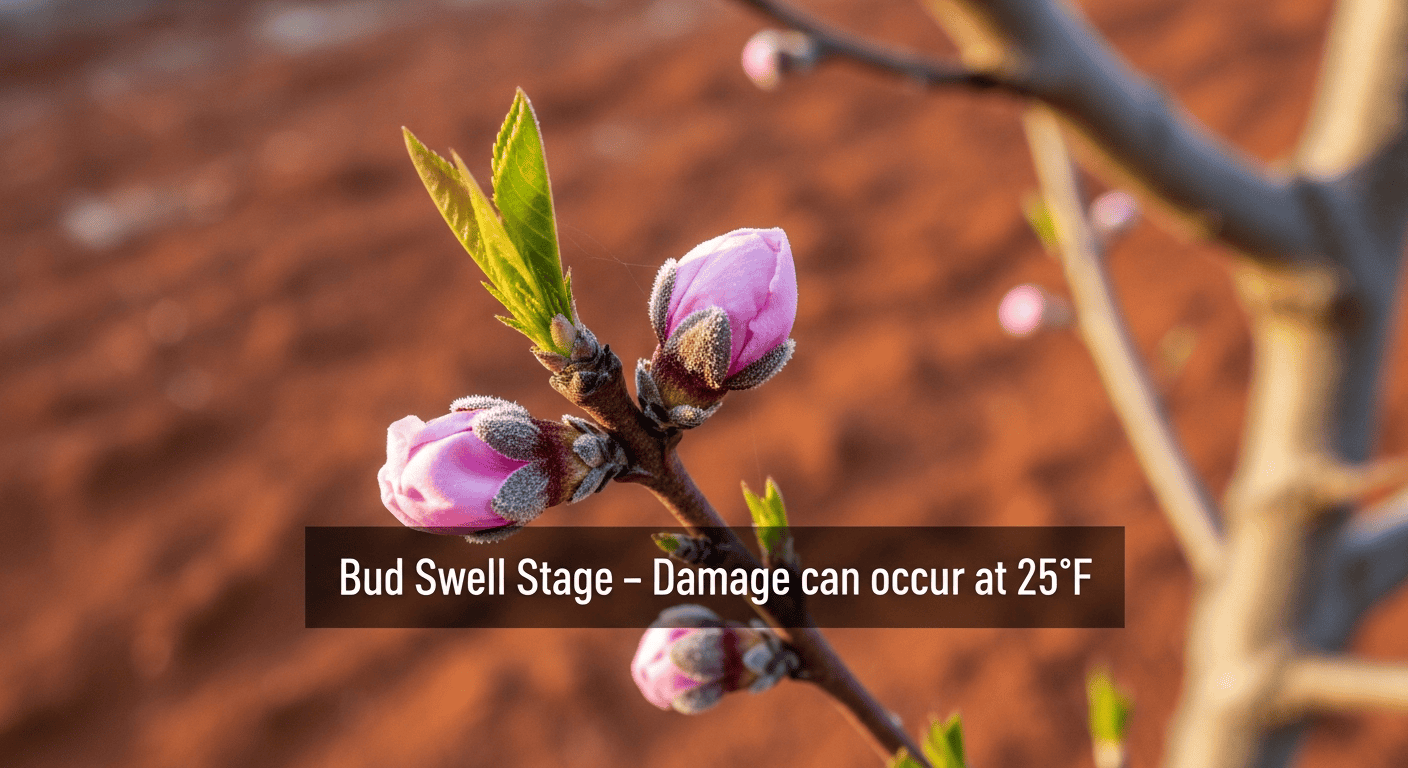
- Bud Swell (Color Showing): At this first stage, when you can just see the pink or white of the petals, the buds are still fairly hardy. However, a hard freeze can still be devastating. Critical Temperature: 25°F.
- Full Bloom (Flowers Open): This is the most beautiful and most vulnerable stage. The delicate reproductive parts of the flower are completely exposed. It doesn’t take much to destroy them. Critical Temperature: 27°F.
- Post-Bloom (Young Fruit Forming): Once pollination occurs and you see tiny, pea-sized fruits, the danger isn’t over. These infant fruits are extremely tender and susceptible to cold. Critical Temperature: 28°F.
Remember, these are the temperatures where significant crop loss occurs. The goal is to keep the air temperature around your blossoms above these critical points.
Your First Line of Defense: Smart Site Selection
The best time to protect a tree from frost is before you even plant it. If you’re planning a new backyard orchard, where you put those trees is your single most important decision. You may have heard the old saying that “cold settles,” and it’s absolutely true.
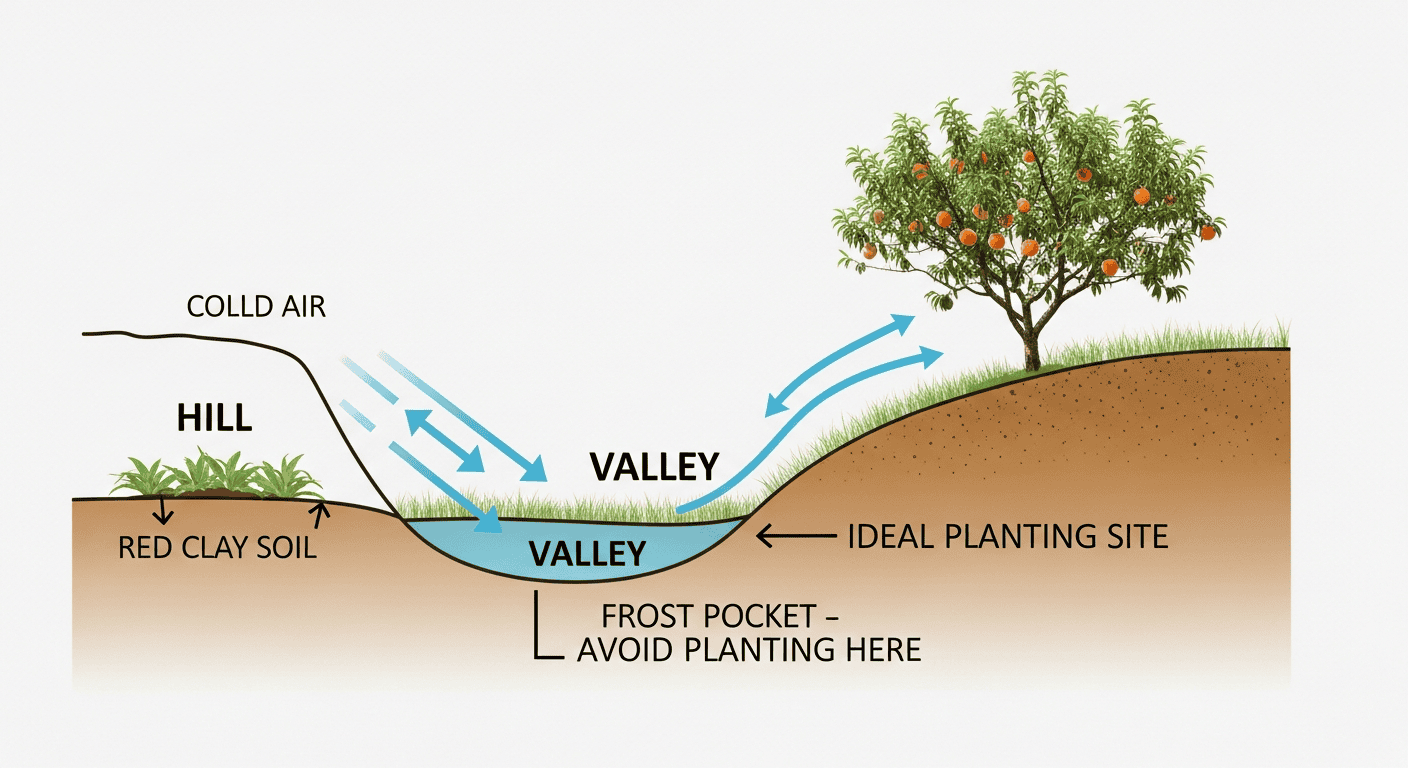
Cold air is denser and heavier than warm air. On a calm, clear night, it flows like water across the landscape, settling in the lowest possible spot. This creates what we call a “frost pocket.”
- Avoid the Low Spots: That dip at the back of your property might seem like a sheltered location, but it’s likely the coldest place on your land during a radiation frost. On a cold night, it could be 5-10 degrees colder there than on higher ground just 50 feet away.
- Embrace the Slopes: The ideal location for a fruit tree in Georgia is on a gentle, south-facing slope. This positioning allows cold air to drain away from the tree and also gives it maximum sun exposure during the day to warm the ground.
- Consider Air Drainage: Don’t plant your trees at the bottom of a hill right up against a dense wall or fence line. This can act like a dam, trapping the cold air around your trees instead of letting it flow past and away.
The Active Battle: Proven Frost Protection Methods
Alright, so your trees are already in the ground and a frost is on its way. It’s time to go to battle. For the homesteader and backyard grower, a few proven methods work wonders.
Method 1: Covering Your Trees (The Homesteader’s Best Friend)
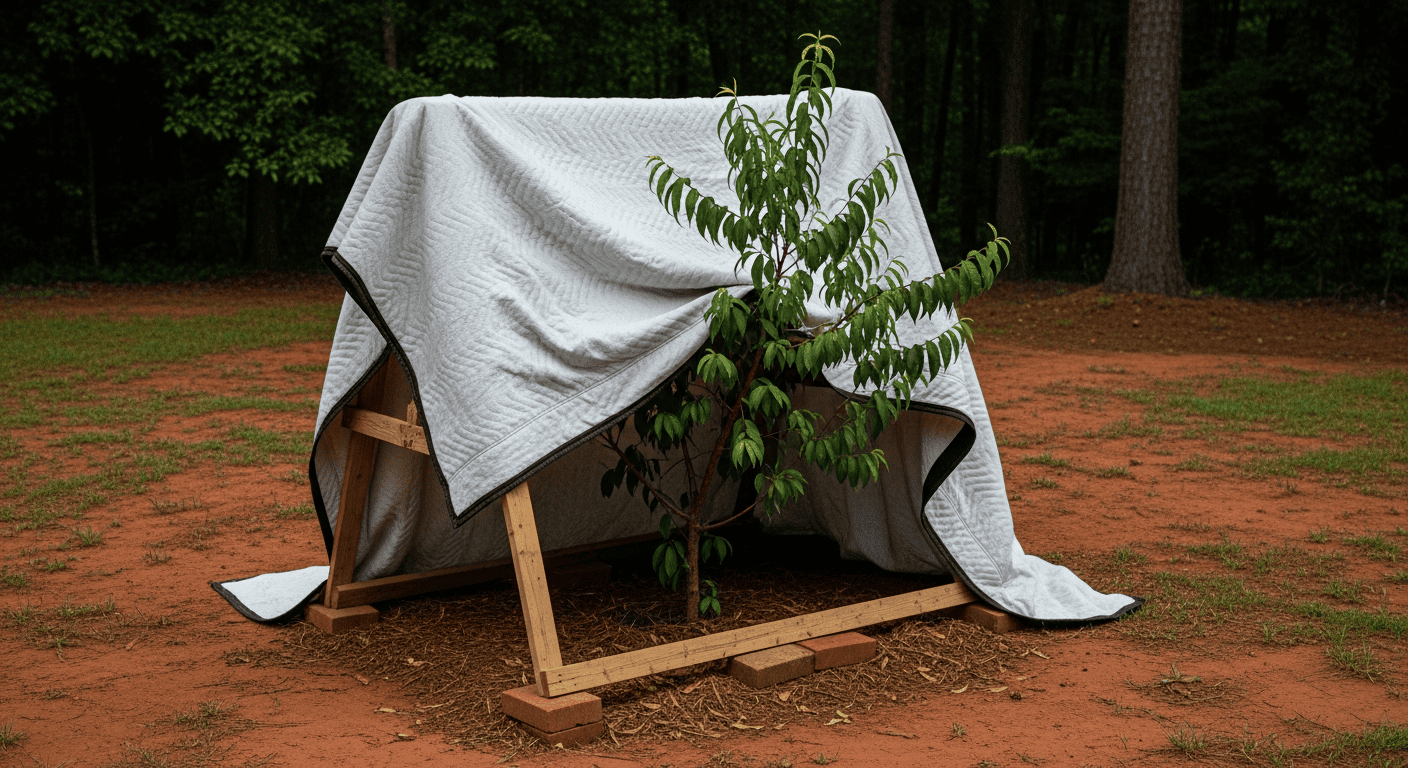
This is the most reliable and accessible method for protecting small to medium-sized trees. The principle is simple: the ground absorbs the sun’s heat all day, and at night, it radiates that heat back out. By covering your tree, you trap that warmth, creating a microclimate that can be several degrees warmer than the surrounding air.
- Timing is Everything: You MUST cover your trees before the sun goes down. If you wait until it’s already cold, there won’t be any trapped heat to work with. The goal is to capture the day’s warmth.
- Technique Matters: Don’t just toss a blanket on the tree. The cover needs to extend all the way to the ground to create a seal. More importantly, you need to create a frame or use stakes to keep the material from directly touching the blossoms. Where the cover touches the flower, heat will conduct right through, and the blossom will freeze anyway. A simple A-frame of wood or a cage of PVC pipe works perfectly.
- Uncover in the Morning: As soon as the sun is up and the temperature rises safely above 32°F, remove the cover. Your trees need sunlight and air circulation. Most importantly, if they are in bloom, the pollinators (our friendly bees) need to be able to get to the flowers.
For materials, old blankets, quilts, and commercial frost cloths work best as they don’t transfer cold as easily as plastic. You can use a tarp, but it’s critical that it doesn’t touch the foliage.
Method 2: Adding a Little Heat (For a Critical Freeze)
Sometimes, the forecast is for a deep, hard freeze where a simple cover might not be enough. If temperatures are predicted to drop into the low 20s, adding a small, safe heat source under the cover can provide the extra degrees of protection that save your crop.
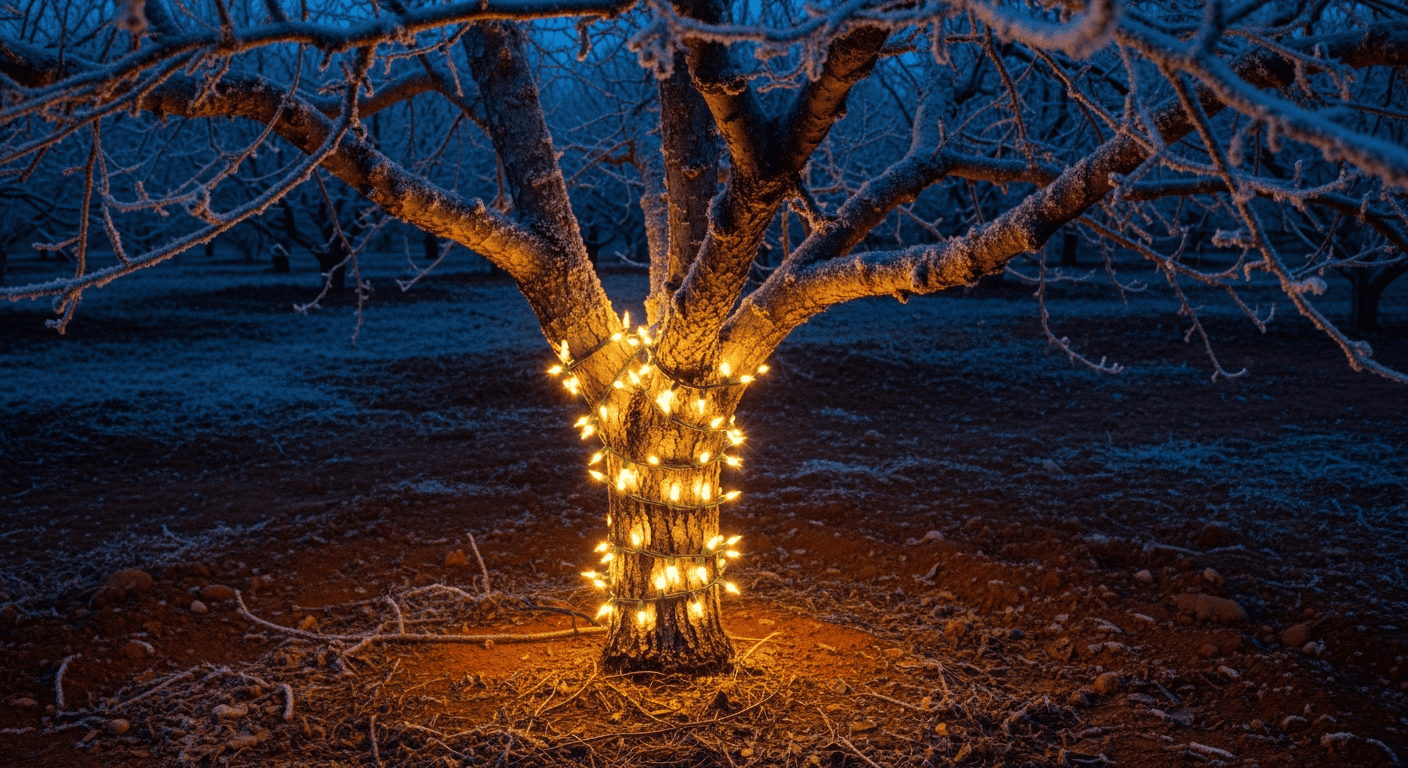
- The Right Tool for the Job: We’re not talking about building a bonfire. A single 100-watt incandescent light bulb (the old-fashioned, heat-producing kind) or a string of larger C7 or C9 Christmas lights can generate a surprising amount of warmth in an enclosed space.
- Safety is Paramount: This is where you have to be extremely careful. NEVER allow the bulb or light string to touch the cover, the tree trunk, or any branches. This is a serious fire hazard. Securely hang the light from an inner branch or place it on a non-flammable base.
- Use Outdoor-Rated Equipment: Only use extension cords and light fixtures that are rated for outdoor use. Ensure your connections are secure and protected from any potential moisture. Plug into a GFCI (Ground Fault Circuit Interrupter) outlet for maximum safety.
This method, used in conjunction with a proper cover, can protect blossoms even when the outside air temperature drops to 20-22°F.
Method 3: The “Big Guns” – A Word on Irrigation
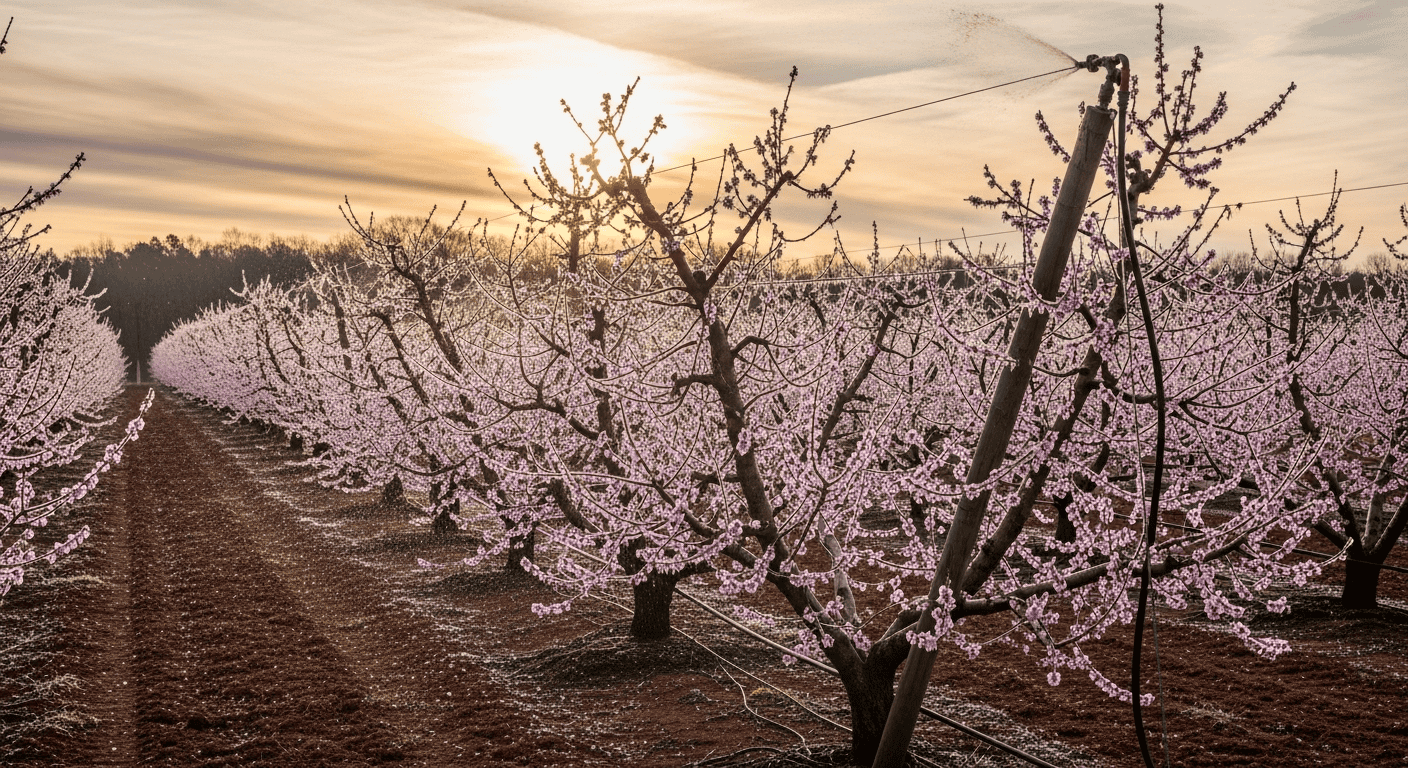
You may have seen news reports of commercial farms in Georgia running sprinklers on their crops during a freeze. This is an incredibly effective method, but it is also incredibly risky for a homeowner. The science is fascinating: as water freezes on the blossoms, it releases latent heat, which keeps the surface of the plant tissue right at 32°F. As long as water is continually freezing, the temperature won’t drop any lower.
However, the risks are huge:
- It Must Be Continuous: You have to start the water before temperatures hit freezing and run it constantly until the ice is melted by the morning sun. If you stop too early, the water on the blossoms will evaporate, causing a rapid cooling effect that is far more damaging than the frost itself.
- Ice Weight: The weight of the ice can become immense, easily snapping branches or even splitting the entire tree. Home orchard trees often aren’t pruned to handle that kind of load.
- System Failure: A power outage or a clogged sprinkler head in the middle of the night would be catastrophic for your trees.
For these reasons, I generally advise all home growers in our area to stick with covering and supplemental heat. Leave the overhead irrigation to the professionals with dedicated systems.
Playing the Long Game: Choosing Frost-Tolerant Varieties
The most powerful tool you have against late frosts is foresight. Planting a fruit tree is a long-term commitment, and choosing the right variety for our tricky Georgia climate can make all the difference. “Frost-tolerant” can mean two things: either the blossoms themselves are genetically tougher, or the tree simply blooms later in the season, avoiding the most common frost dates altogether.
Here are a few excellent peach varieties for our Zone 8a region, keeping frost in mind:
- Jefferson Peach: This one is a star for cold hardiness. It was specifically developed to have blossoms that can withstand late spring frosts better than most other varieties. It does require about 850 chill hours, so it’s a great fit for North and Central Georgia.
- Redskin Peach: A reliable and delicious cross between Red Haven and Elberta, this variety performs very well across Georgia. It’s a dependable choice that tends to bloom late enough to miss some of the early cold snaps.
- Elberta Peach: The classic Georgia peach for a reason. It’s a tough, resilient tree that has proven itself in our state for generations. It’s a late-season peach, ripening in late July or August.
- Floridaking Peach: If you’re in the southern part of Zone 8a or closer to the fall line, this is a fantastic choice. It requires only 450 chill hours, meaning it blooms and sets fruit very early. It ripens in May, often producing a full crop before the biggest late frost threats have even passed.
Frequently Asked Questions (FAQ)
1. Will a simple bed sheet protect my tree?
It’s better than nothing! A sheet can provide 1-2 degrees of protection. However, a thicker material like a blanket, quilt, or commercial frost cloth is much better as it provides more insulation and traps more heat.
2. I forgot to cover my tree before sunset. Is it too late?
It’s always better to cover it than not. While you’ve missed the opportunity to trap the maximum amount of ground heat, a cover can still help prevent frost from settling directly on the blossoms and can trap whatever heat the tree and ground are still radiating.
3. Can I use a plastic tarp?
You can, but with extreme caution. Plastic is a poor insulator and transfers cold very easily. If a plastic tarp touches the blossoms, it will almost certainly cause them to freeze. If you use plastic, it is absolutely essential to have a frame that keeps it from making any contact with the tree.
4. I heard watering the ground around the tree helps. Is that true?
Yes, it is. Moist soil absorbs more solar heat during the day and radiates more heat throughout the night than dry soil. Watering the ground thoroughly a day or two before a predicted frost can raise the temperature in the immediate vicinity by a couple of degrees.
5. Does wind make a frost worse?
It depends. A classic “radiation frost” happens on calm, clear nights. A light wind can actually help in this case by mixing the colder air at the ground with warmer air above it. However, a strong, cold wind (an “advective freeze”) is much more dangerous as it strips away any stored heat and makes covering less effective.
6. My tree is too big to cover. What can I do?
This is a tough situation and a good argument for keeping fruit trees pruned to a manageable size (10-12 feet). For a large tree, your options are limited. You can try to cover just the lower, most productive branches. Some people have success with wrapping the trunk and main limbs with C9 Christmas lights, but protecting the entire canopy is nearly impossible for a homeowner.
7. How do I know what stage my buds are in?
Get up close and look. “Bud swell” is when the buds look plump and you can just see a sliver of pink or white. “Full bloom” is obvious—the flowers are fully open. “Post-bloom” or “fruit set” is when the petals have fallen off and you can see a tiny, green, pea-sized fruit where the flower used to be.
8. I live in North Georgia (Zone 7). Does this advice still apply?
Absolutely. The principles are exactly the same. Your last average frost date is later than ours in Forsyth County, so choosing late-blooming varieties like Jefferson is even more critical for you. Your lows may also be colder, so using a supplemental heat source under your cover is a very good idea.
9. Is it okay for the frost cloth or blanket to get wet from dew?
Yes, that’s perfectly fine. The material will still provide insulation. The main goal is to create a barrier that traps the radiant heat from the ground.
Sources
- Alabama Cooperative Extension System – “Fruit Tree Frost Protection”:
https://www.aces.edu/blog/topics/lawn-garden/fruit-tree-frost-protection/ - UGA Extension – “Commercial Freeze Protection for Fruits and Vegetables”:
https://extension.uga.edu/publications/detail.html?number=B1479 - TreeVitalize – “9 Best Varieties of Peach Trees to Grow in Georgia”:
https://treevitalize.com/georgia-peach-trees/

![DIY Smart Home Sensors [ESPHome Guide]](https://www.cannoncreek.com/wp-content/uploads/2026/01/article_image_1768313989_673-768x419.png)