Beyond Kudzu: A Georgia Homeowner’s Guide to Invasive Plants and Their Native Replacements
Beyond Kudzu: A Georgia Homeowner’s Guide to Invasive Plants and Their Native Replacements
Howdy, neighbor. Down here in Forsyth County, Georgia, we spend a lot of time fighting with the land. We fight the heat, we fight the pests, and we fight our stubborn red clay. But one of the most important fights—and one we can actually win—is against the invasive plants that have taken over our yards, parks, and woodlands. These aren’t just weeds; they’re ecological bullies that crowd out our native species, harm our wildlife, and make our jobs as stewards of the land a whole lot harder.
This guide is your battle plan. It’s born from years of experience, a little bit of sweat, and a whole lot of trial and error right here on my farm. We’re going to identify the worst offenders you likely have in your own backyard, talk about why they’re so bad for our specific Georgia ecosystem, and then introduce you to some beautiful, tough-as-nails native alternatives that will thrive here. Choosing native isn’t just a trend; it’s a practical, powerful way to create a healthier landscape that works with Georgia’s nature, not against it.
Key Takeaways
- Identify and Remove: Common invasive plants in Georgia like Nandina, Chinese Privet, English Ivy, and Bradford Pear actively harm local wildlife and ecosystems. Removing them is the first step to a healthier landscape.
- Choose Georgia-Tough Natives: Replace invasives with native alternatives like Virginia Sweetspire, Yaupon Holly, and Serviceberry. These plants are naturally adapted to our hot summers, clay soil, and local wildlife, requiring less water, fertilizer, and fuss.
- Proper Removal is Crucial: Simply cutting down an invasive plant is often not enough. You must remove the entire root system or treat the stump to prevent aggressive resprouting. Never compost the seeds or berries of invasive species.
The Deep Dive: Reclaiming Your Georgia Landscape
Let’s get our hands dirty. We’ll go through the “Most Wanted” list of invasive plants one by one. I’ll tell you how to spot them, why they’re such a menace, and then give you some fantastic native replacements that will make you wonder why anyone planted the invasive in the first place.
The Deceptive Shrub: Nandina (Nandina domestica)
You know this one. It’s in every other suburban yard, sold at big box stores as “Heavenly Bamboo.” It has lacy foliage and bright red berries that persist through winter. It looks pretty, but it’s a killer.
The Problem with Nandina in Georgia:
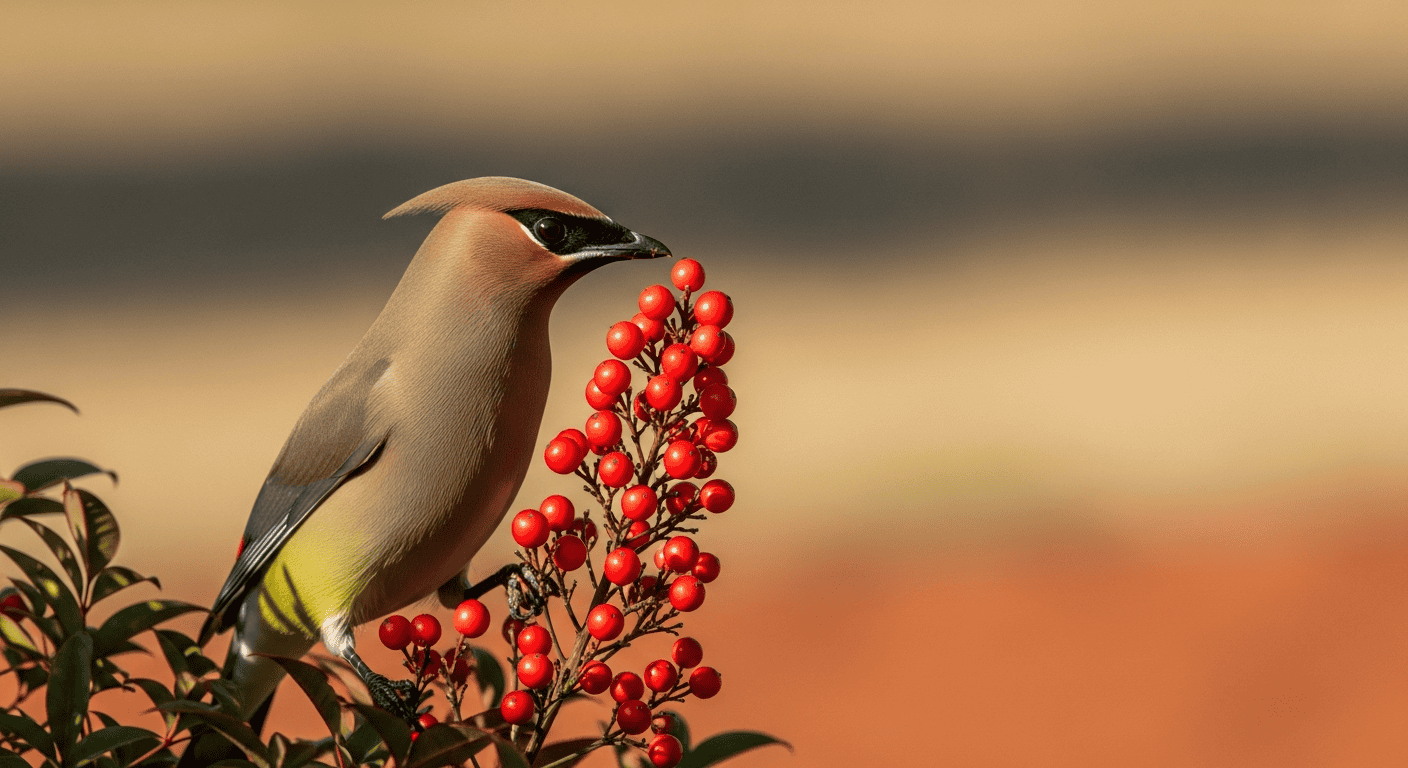
- Toxic to Birds: Those shiny red berries contain cyanide. When birds, like our beloved Cedar Waxwings, are hungry in late winter, they’ll gorge on these berries, and it can be fatal. It’s a tragic, entirely preventable problem.
- Aggressive Spreader: Birds that do survive eating the berries fly off and deposit the seeds everywhere. Before you know it, Nandina is popping up deep in our woodlands, displacing the native plants that birds and other wildlife actually need to survive.
- No Ecological Value: Besides its toxicity, Nandina offers zero value to our local ecosystem. No native insects use it as a host plant, meaning it doesn’t support the food web that feeds baby birds and other creatures.
Native Replacement #1: Virginia Sweetspire (Itea virginica)
If you want multi-season interest, this is your plant. Virginia Sweetspire is a true Georgia champion. In late spring, it produces long, drooping clusters of fragrant white flowers that are a magnet for pollinators. But the real show is in the fall, when its leaves turn a breathtaking shade of fiery red and deep purple that lasts for weeks.
- Growing Conditions: It’s not picky. It thrives in full sun to partial shade and is perfectly happy in our heavy Georgia clay, even in areas that stay a bit damp. Once established, it’s quite drought-tolerant.
- Wildlife Value: The flowers provide nectar for bees and butterflies. It’s also a host plant for the Spring Azure butterfly.
- Our Farm’s Take: We use this along woodland edges where it gets some afternoon shade. It’s a “plant it and forget it” shrub that rewards you year after year.
Native Replacement #2: Oakleaf Hydrangea (Hydrangea quercifolia)
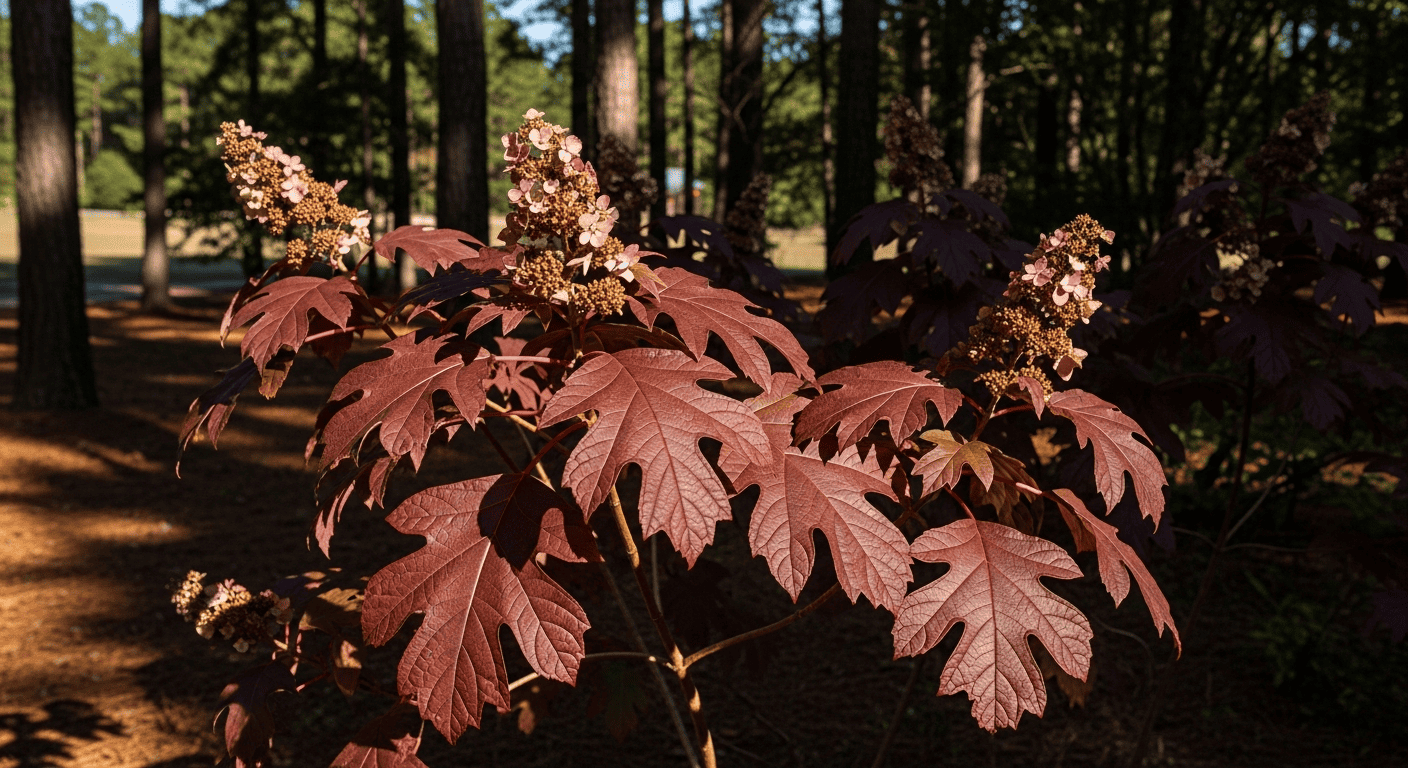
This is the official state wildflower of Alabama, but we Georgians love it just as much. It’s a bold, dramatic shrub that provides year-round structure. The huge, cone-shaped clusters of white flowers bloom for months in the summer, aging to a lovely pinkish-brown. The leaves, shaped like an oak leaf, turn a rich burgundy in the fall. Even in winter, the peeling, cinnamon-colored bark is beautiful.
- Growing Conditions: It’s a shade-lover, perfect for the north side of your house or under the canopy of our native pines and oaks. It prefers moist, well-drained soil but will handle our summer dry spells once its roots are established.
- Wildlife Value: It provides excellent shelter for birds and other small creatures. Pollinators will visit the flowers, though they aren’t as much of a powerhouse as the Sweetspire.
- Our Farm’s Take: This is the backbone of a shade garden. It provides that “wow” factor without the diva-like demands of some other hydrangeas.
The Impenetrable Thicket: Chinese Privet (Ligustrum sinense)
If you’ve ever tried to walk through a neglected patch of woods in Georgia, you’ve met Chinese Privet. This is arguably the single worst woody invasive in the Southeast. It forms dense, light-blocking thickets where absolutely nothing else can grow.
The Problem with Privet in Georgia:
- Habitat Annihilation: Privet creates a monoculture. It shades out native wildflowers, tree seedlings, and shrubs, effectively destroying the understory layer of the forest that so much of our wildlife depends on for food and shelter.
- Explosive Spreader: It produces thousands of seeds that are spread by birds, and it also sends up suckers from its roots. Trying to control it feels like a never-ending battle.
- Allergen Bomb: The small, white, sickly-sweet flowers release a massive amount of pollen in the spring, which is a major irritant for allergy sufferers.
Native Replacement #1: Yaupon Holly (Ilex vomitoria)
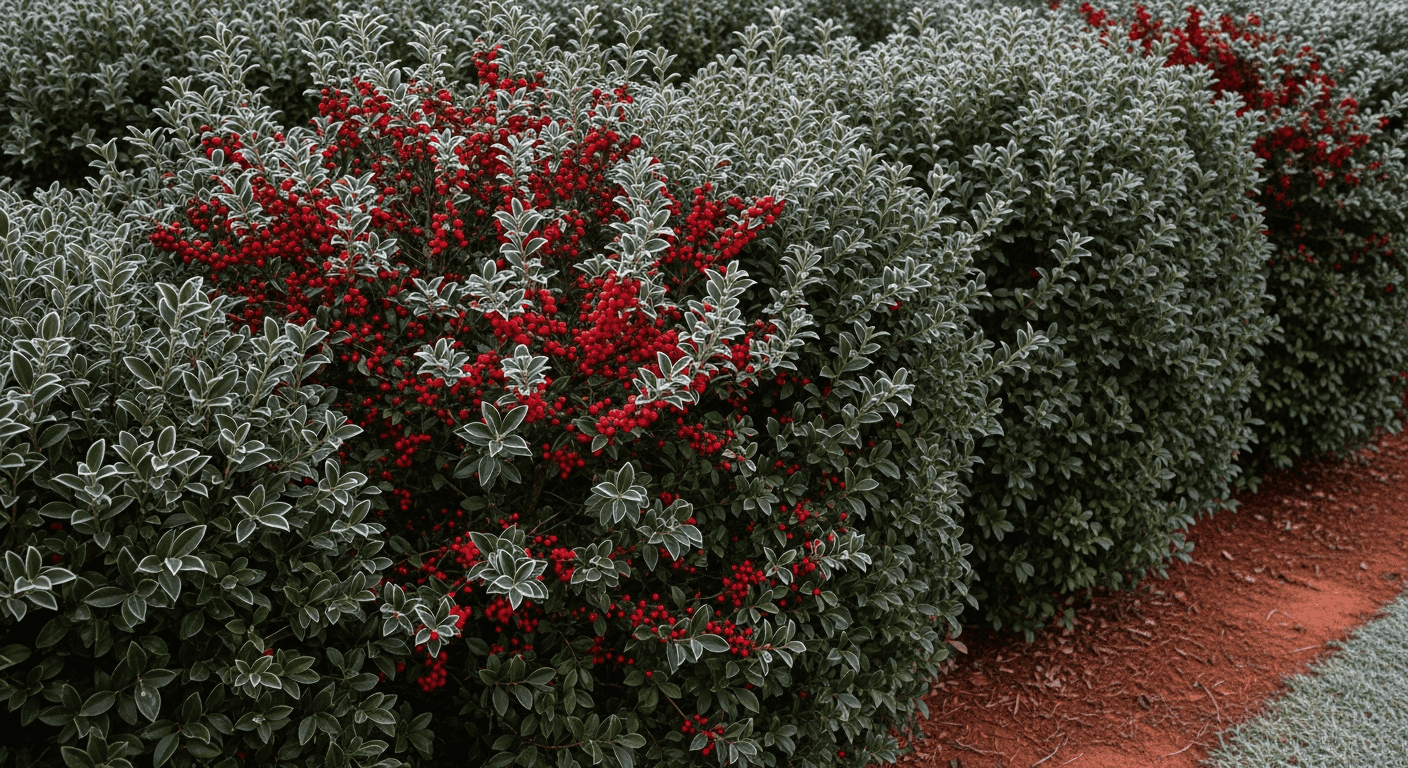
Don’t let the scientific name scare you; this is one of the toughest, most versatile, and most valuable native plants you can grow. Yaupon Holly is a broadleaf evergreen that can be pruned tightly into a formal hedge (a perfect Privet replacement) or left to grow into its natural, sculptural form.
- Growing Conditions: It is incredibly adaptable. It tolerates full sun, partial shade, drought, flooding, and our Georgia clay soil. It’s practically indestructible.
- Wildlife Value: Female plants produce brilliant red berries that are a critical winter food source for birds like bluebirds, mockingbirds, and robins. The dense evergreen foliage also provides excellent nesting sites and year-round cover.
- Our Farm’s Take: We have a hedge of this that gets blasted by the August sun and never complains. It’s the definition of a low-maintenance, high-reward plant.
Native Replacement #2: Wax Myrtle (Morella cerifera)
If you need a fast-growing screen, Wax Myrtle is your answer. This evergreen shrub has olive-green leaves that release a pleasant, bayberry-like scent when crushed. It has a more open, airy structure than Yaupon Holly and grows very quickly to create privacy.
- Growing Conditions: It loves sun and tolerates a wide range of soils, from sandy to heavy clay, and can even handle boggy, wet spots where other plants would fail.
- Wildlife Value: The waxy, bluish-gray berries produced on female plants are a high-fat, high-energy food source essential for many birds, especially the Yellow-rumped Warbler, during their winter migration.
- Our Farm’s Take: We use Wax Myrtle to create fast privacy screens along property lines. It’s also fantastic for erosion control on slopes.
The Green Desert: English Ivy (Hedera helix)
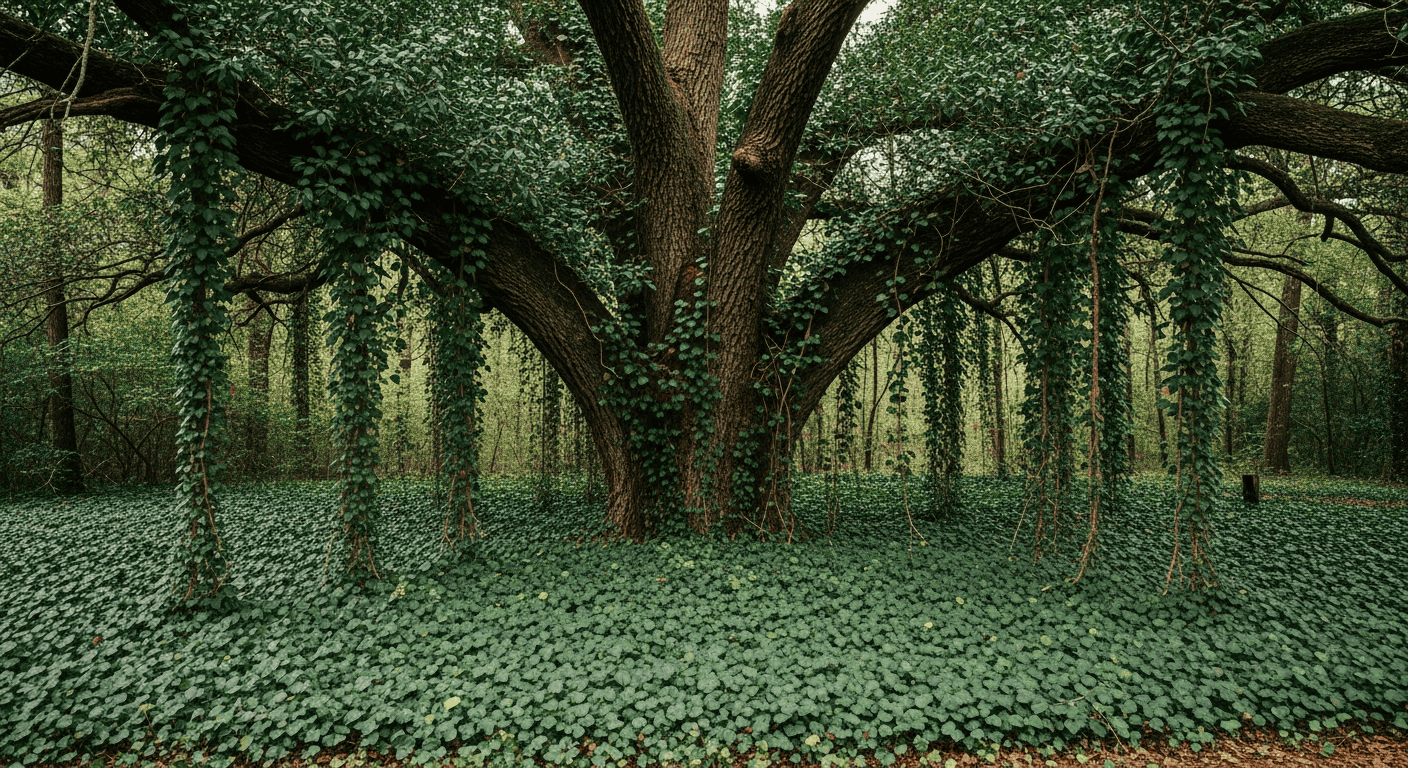
It looks classic and old-world climbing up a brick wall, but English Ivy is a nightmare for our Georgia ecosystems. It creates what ecologists call an “ivy desert”—a patch of ground where nothing else can survive.
The Problem with English Ivy in Georgia:
- Smothers Everything: On the ground, it forms a dense mat that prevents sunlight from reaching any native wildflower seeds or tree seedlings. In a few years, the forest floor becomes a sterile monoculture of ivy.
- Kills Trees: When it climbs trees, it’s not harmless. The sheer weight of the vines can make trees more susceptible to blowing over in storms. The dense foliage blocks sunlight from reaching the tree’s own leaves, and it traps moisture against the bark, promoting rot and disease.
- Harbors Pests: The dense cover is an ideal hiding spot for rodents. It has also been shown to be a reservoir for Bacterial Leaf Scorch, a disease that affects our native oaks.
Native Replacement #1 (Groundcover): Partridge Berry (Mitchella repens)
For that shady spot where you thought only ivy would grow, meet Partridge Berry. This is a delicate, low-growing, evergreen groundcover that forms a beautiful mat over time. It has small, paired white flowers in the spring, followed by a single bright red berry that persists through winter.
- Growing Conditions: It’s a true woodland plant. It needs partial to full shade and prefers acidic, humus-rich soil, just like the conditions under our native pines and oaks.
- Wildlife Value: The berries are eaten by birds like wild turkeys and ruffed grouse, as well as small mammals.
- Our Farm’s Take: This isn’t an instant-gratification plant. It takes time to establish, but it’s worth the wait. It creates a beautiful, living carpet that belongs in our Georgia woods.
Native Replacement #2 (Climbing Vine): Crossvine (Bignonia capreolata)
If you want a vine to climb a trellis, fence, or arbor, Crossvine is a spectacular native choice. This vigorous, semi-evergreen vine uses little tendrils to cling to surfaces. In early spring (often March here in Georgia), it’s covered in stunning trumpet-shaped flowers that are typically reddish-orange with a yellow throat.
- Growing Conditions: It’s adaptable, growing in full sun to partial shade. More sun means more flowers. It’s not picky about soil.
- Wildlife Value: It is one of the earliest and most important nectar sources for hummingbirds returning from their migration. It’s a sight to behold when the hummingbirds are feasting on the flowers.
- Our Farm’s Take: We have one growing up an old fence post. It’s the first thing to bloom in the spring and tells us that warmer weather is truly on its way.
The Weak & Wicked Tree: Bradford Pear (Pyrus calleryana ‘Bradford’)
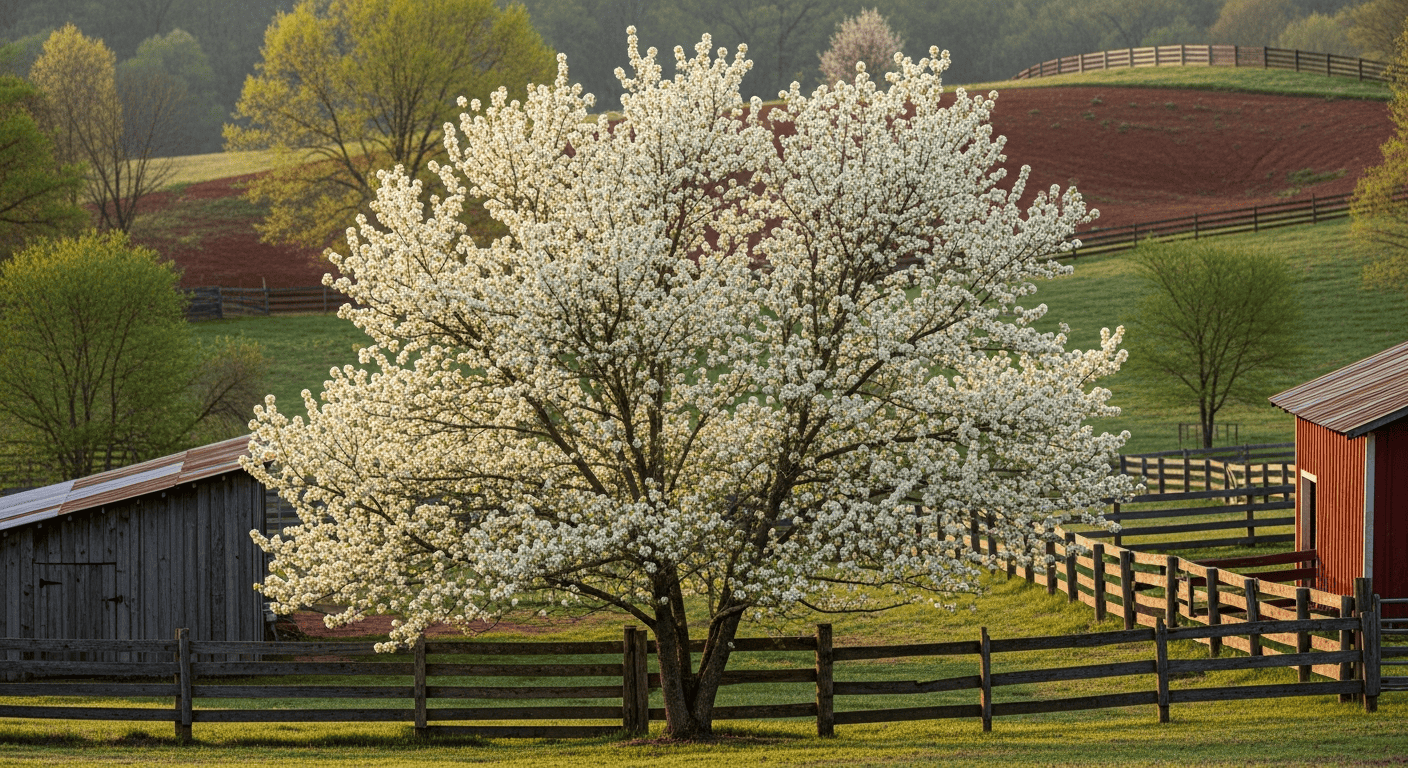
Ah, the Bradford Pear. For a few weeks in spring, it’s a cloud of white flowers. The rest of the year, it’s a ticking time bomb. It was once the most popular landscape tree in America, and now it’s one of our most problematic invasive species.
The Problem with Bradford Pears in Georgia:
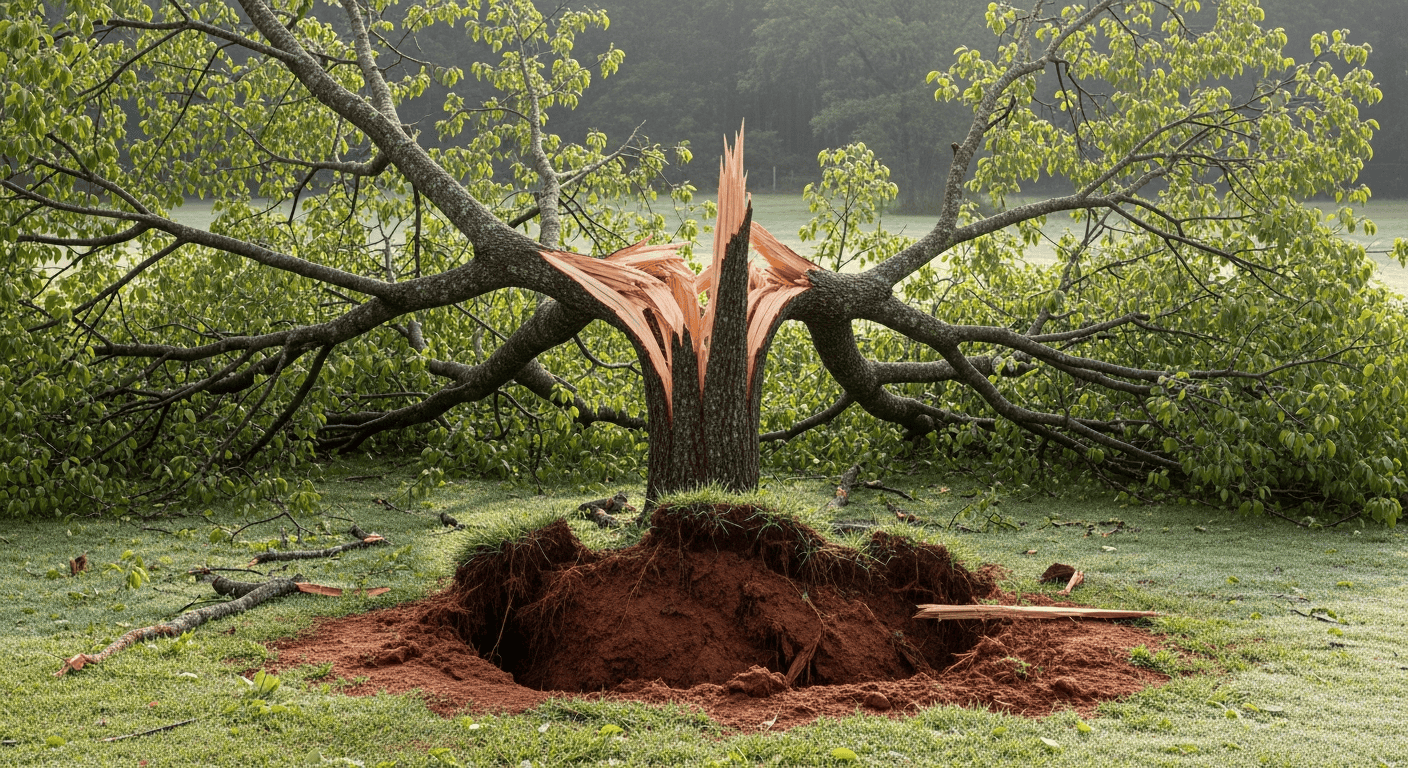
- Structurally Awful: The “Bradford” cultivar has a weak branch structure, with many branches originating from the same point on the trunk. This means it inevitably splits apart in storms, usually after about 15-20 years.
- The Invasive Offspring: The original ‘Bradford’ was sterile. But it cross-pollinates with every other Callery pear cultivar out there. The resulting offspring revert to the wild Callery pear form—a thorny, aggressive, thicket-forming tree that is now invading roadsides, fields, and forests all over Georgia.
- The Smell: Let’s be honest. Those flowers smell like rotting fish.
Native Replacement #1: Serviceberry (Amelanchier arborea)
Also known as a Downy Serviceberry or Juneberry, this is a truly magnificent small native tree that offers something special in every season. In early spring, it’s covered in clouds of delicate white flowers. In early summer, it produces delicious, blueberry-like fruits. In the fall, the leaves turn brilliant shades of orange and red.
- Growing Conditions: It’s an understory tree, so it’s happy in full sun to partial shade. It tolerates a range of soils but does best in well-drained sites.
- Wildlife Value: The flowers support early pollinators. The fruit is a favorite of over 40 species of birds, including Cedar Waxwings, orioles, and tanagers. The fruit is also delicious for people!
- Our Farm’s Take: This is the first tree we recommend to anyone who has to take down a Bradford Pear. It has all the beauty and none of the baggage.
Native Replacement #2: Eastern Redbud (Cercis canadensis)
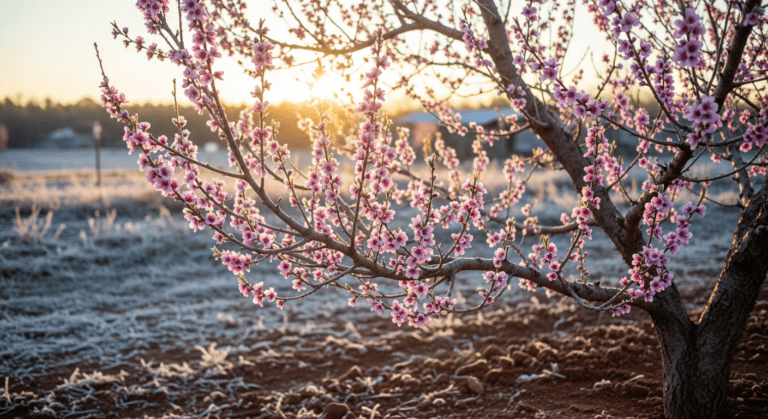
Nothing says “spring in Georgia” quite like a Redbud in full bloom. Before any leaves appear, the branches are completely covered in vibrant, magenta-pink blossoms. It’s a breathtaking sight against the still-dormant woods. It has a lovely, often multi-trunked, vase shape and heart-shaped leaves that turn a pleasant yellow in the fall.
- Growing Conditions: It’s a tough, adaptable understory tree that thrives in sun or shade. It’s well-suited to our clay soil.
- Wildlife Value: The early flowers are a vital nectar source for bees and other emerging pollinators. The seeds are eaten by some birds, and it’s the host plant for the Henry’s Elfin butterfly.
- Our Farm’s Take: A classic for a reason. It’s reliable, beautiful, and a true sign of the Georgia spring.
Frequently Asked Questions (FAQ)
1. Why are invasive plants so much worse than regular weeds?
Regular weeds are often opportunistic plants that pop up in disturbed soil but don’t typically take over healthy ecosystems. Invasive plants are non-native species that aggressively spread and cause ecological harm by outcompeting native plants, disrupting food webs, and degrading wildlife habitat.
2. I think I have an invasive plant, but I’m not sure. How can I identify it?
The best way is to use a plant identification app (like PictureThis or Seek) and then cross-reference the result with the Georgia Invasive Species Council’s website or the UGA Extension website. You can also take a clear photo to your local nursery or county extension agent.
3. Where is the best place to buy native plants in Georgia?
Look for local nurseries that specialize in native plants. Avoid big box stores, which are often the primary sellers of invasive species like Nandina and Bradford Pears. The Georgia Native Plant Society is an excellent resource for finding reputable growers.
4. I’ve removed the invasive plants. Now what’s the best way to plant their native replacements?
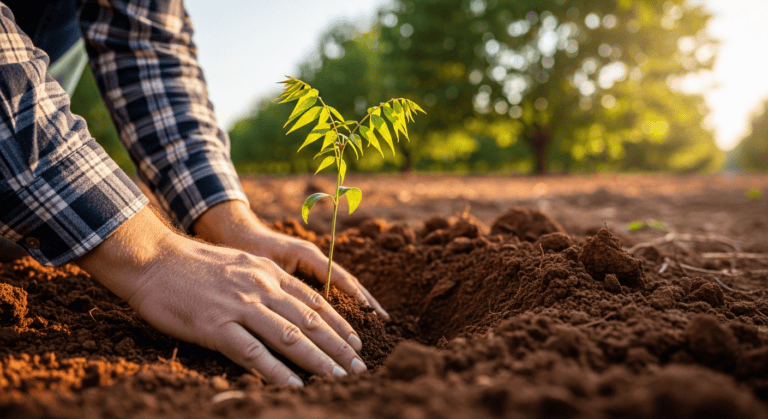
Dig a hole twice as wide as the root ball but no deeper. Gently loosen the roots of the new plant. Place it in the hole, ensuring the top of the root ball is level with the surrounding soil. Backfill with the native soil you removed (no need for lots of amendments), water it in thoroughly, and apply a 2-3 inch layer of mulch, keeping it away from the base of the plant. Water regularly for the first year, especially during our hot, dry Georgia summers, to get it established.
5. Is it better to remove invasives by hand or with chemicals?
It depends on the plant and the size of the infestation. For small plants like young Nandina or English Ivy, hand-pulling (especially after a rain) to get the whole root is best. For large, established shrubs like Privet, the “cut-stump” method is most effective: cut the shrub down to the ground and immediately paint the cut surface with a concentrated herbicide like glyphosate or triclopyr to kill the root system. Always read and follow the herbicide label directions carefully.
6. When is the best time of year to remove invasive plants in Georgia?
Fall and winter are often the best times. The ground is softer for pulling, and deciduous plants are easier to identify and access. For the cut-stump herbicide method, fall is ideal because plants are sending energy down to their roots, which will carry the herbicide with it more effectively.
7. Will these native plants attract more deer to my yard?
Some native plants are more deer-resistant than others. Yaupon Holly and Wax Myrtle are generally quite deer-resistant. Virginia Sweetspire is moderately resistant. Oakleaf Hydrangea, Serviceberry, and Redbud can be browsed by deer, especially when young. If deer are a major problem in your area, you may need to protect young trees and shrubs with cages for the first few years.
8. I can’t get rid of all the English Ivy on my trees. What’s the most important first step?
Focus on saving the trees first. Using pruning shears and a small saw, cut the ivy vines at the base of each tree trunk, about waist-high. Carefully pull the vines away from the trunk at the bottom to create a “lifesaver” gap. The ivy above this cut will die, wither, and eventually fall off. You can then work on clearing the ivy from the ground later.
9. What do I do with the invasive plants once I’ve removed them?
Do NOT compost them, especially if they have berries or seeds. This will just spread the problem. The best practice is to bag the material, particularly the roots and any seed-bearing parts, and put it in your household trash to be taken to a landfill. Larger woody material can be piled up to dry out and rot in a controlled area.
10. This feels overwhelming. Where should I start?
Start small! Pick one area of your yard, maybe a single Bradford Pear or a patch of Nandina. Remove it, and plant its native replacement. Seeing that one small success and the beauty of the new native plant will give you the motivation to tackle the next area. It’s a marathon, not a sprint.
Sources
- Georgia Invasive Species Council – Native Alternatives:
https://gainvasivespeciescouncil.org/alternatives/ - UGA Extension – Invasive Plants in the Home Landscape (PDF):
https://site.extension.uga.edu/georgiagreen/files/2021/01/Invasive-Plants1.pdf - UGA Marine Extension and Georgia Sea Grant – Native & Invasive Plants:
https://gacoast.uga.edu/outreach/programs/ecoscapes/native-invasive-plants/

![DIY Smart Home Sensors [ESPHome Guide]](https://www.cannoncreek.com/wp-content/uploads/2026/01/article_image_1768313989_673-768x419.png)